
En bref· Quick answer
A French-speaking family in Calgary has three school paths: the francophone board FrancoSud (French-first schooling for families with Section 23 rights), French immersion in the public and Catholic districts (for children whose first language is not French), and two private French schools. Childcare is licensed by the province, the subsidy is income-tested, and the francophone family network runs out of the Centre d'appui familial. Kindergarten is open to children who turn five by December 31 of the school year.
- FrancoSud, the French-language school board headquartered in Calgary, runs 19 schools (15 public, 4 Catholic) and 12 affiliated preschools for ages 3 to 5 (FrancoSud, checked 2026-11-03).
- Section 23 of the Canadian Charter gives rights-holding parents the right to French first-language schooling; FrancoSud also considers permanent and temporary residents and some non-rights-holders case by case (FrancoSud admissibility page).
- Children may register for kindergarten if they turn five on or before December 31 of the school year (Calgary Board of Education, 2026-27 registration).
- Early French immersion starts in kindergarten or Grade 1; late immersion starts in Grade 7 with no prior French required (CBE).
- Alberta licenses facility-based daycares, preschools, out-of-school care and family day homes (up to 6 children, via a licensed agency); use the provincial Childcare Search to check a program's record (alberta.ca).
- The Child Care Subsidy for kindergarten to Grade 6 care outside school hours is for families earning under $90,000 a year; apply through an Alberta.ca Account (alberta.ca, checked 2026-11-03).
Calgary is one of the few cities in Western Canada where a family can run a child’s whole education in French, from a preschool at three to a diploma at eighteen, without leaving the city. It is also a city where that path is easy to miss if nobody tells you it exists: the francophone school board does not advertise on bus shelters, and the English-language districts will happily enrol your child in immersion without mentioning the alternative. This guide walks the whole road, from the first daycare search to adult French classes, with the official door for each step.
How childcare is organized in Alberta
Alberta licenses childcare at the provincial level, and the licence type tells you a lot about what you are looking at. According to the Government of Alberta’s parent guide, licensed care comes in three main forms:
- Facility-based programs operate in commercial, public or private buildings. This covers daycare (up to kindergarten age), preschool (19 months to kindergarten age) and out-of-school care (kindergarten through age 12).
- Family day homes are run by an educator in their own home for up to six children, not counting their own. Educators work under contract with a licensed family day home agency, and that agency, not the individual home, is your first point of contact.
- Group family childcare, run by two or more providers for up to ten children, still exists where licences were already issued, but new licences are no longer granted.
Unlicensed care also exists (a neighbour, a nanny, a private arrangement). It is legal within limits but is not inspected, and it is not eligible for the provincial subsidy.
The practical tool is Alberta’s Childcare Search, which lists licensed programs and family day home agencies with their contact details, whether they offer extended or overnight care, and 18 months of non-compliance history. Treat that history as a conversation starter, not a verdict: a missing form and a safety issue look the same in a list, so ask the director what each entry was.
Waitlists are real, especially for infants and in the inner city. Families who know they are moving often register on several lists before they arrive, which is allowed and normal. Expect to pay a deposit when a space is confirmed.
Paying for childcare: subsidy and affordability
Two different things lower the bill, and they are easy to confuse.
The first is the federal-provincial affordability agreement, under which Alberta is moving licensed programs toward lower average parent fees funded mainly by government rather than by parents. You do not apply for this; it shows up as a lower fee at a participating program. Ask each program whether it participates and what its current parent fee is, because fees are set program by program.
The second is the Child Care Subsidy Program, which you apply for. The provincial page (checked 2026-11-03) describes the subsidy for children in full-time kindergarten and Grades 1 to 6 who attend a licensed facility-based program, a family day home overseen by a licensed agency, or a group family childcare program outside regular school hours. It is for families earning under $90,000 in annual gross income, the amount decreases as income rises, and children must be 12 or younger. You apply online through an Alberta.ca Account and complete a declaration and Canada Revenue Agency consent form; a paper form exists but takes longer. The subsidy can start no earlier than the month the completed application is received, so apply as soon as you have a confirmed space, and renew before it expires. The Alberta Supports Contact Centre (1-877-644-9992) handles questions.
Finding French-language childcare
Francophone childcare in Calgary is a small network inside a large city. Three doors are worth knocking on at the same time.
FrancoSud’s affiliated preschools. The board lists 12 preschools for children aged 3 to 5 attached to its schools. A preschool place is often the natural on-ramp to the same school’s kindergarten, and it is the simplest way to put a child in a French-speaking peer group early.
The Centre d’appui familial. This is the francophone family resource centre for southern Alberta, formed in 2018 from the merger of the Société de la petite enfance et de la famille du Sud de l’Alberta and the Centre de ressources familiales. Its Calgary office is at 1921 10 Avenue SW (403-249-0525), with locations in Lethbridge and Canmore. It runs early-childhood play groups for ages 0 to 6, family activities, after-school programs, parenting support (Triple P), a family library with a mobile branch, and summer camps. It does not run a daycare itself, but it lists partner early-childhood services and is the best-informed place to ask what French-language spaces exist right now.
The provincial Childcare Search. It does not filter by language, so search by neighbourhood and then call. Ask directly: « Dans quelle langue se déroule la journée? » A bilingual educator in an English program is not the same as a French program, and both can be a fine choice depending on what you want.
The three school paths
Every French-speaking family in Calgary chooses among three systems. They are not ranked; they are different.
1. FrancoSud: francophone schooling
The Conseil scolaire FrancoSud is the French-language public school authority for southern Alberta, with its head office in Calgary. Its website lists 19 schools (15 public and 4 Catholic), about 4,400 students, 600 employees and seven new schools in preparation, which tells you how fast this system is growing. Families choose between a public and a Catholic school within the same board.
The legal foundation is section 23 of the Canadian Charter of Rights and Freedoms, which gives official-language minority parents the right to have their children educated in that language where numbers warrant. Alberta’s own French-language education page states it plainly: francophone families, as an official-language minority, have a constitutional right to French first-language education.
FrancoSud’s admissibility page sets out who qualifies:
- Canadian citizens who meet one of three tests: French is the first language learned and still understood; the parent received primary instruction in French in Canada; or one of the parent’s children has received or is receiving primary or secondary instruction in French as a first language in Canada.
- Permanent and temporary residents when a child has already received French first-language instruction in Canada (then all the family’s children may attend), or when the parent would meet the Section 23 criteria if they were a citizen and wants to maintain the child’s francophone language, culture and identity.
- Other situations, reviewed case by case under the board’s directive on exceptional cases: a citizen reclaiming a francophone heritage through a grandparent who would have been a rights-holder, or a French-speaking “francophile” family already integrated in the community whose child can function in French.
What this means in practice: a Quebec family, a family from France or Belgium with permanent residence, a Cameroonian or Haitian family whose children were schooled in French, and a Franco-Albertan family who lost the language a generation ago can all have a path in. The board looks at each file, so write to them early rather than guessing.
A francophone school is a French environment, not a French class. Recess, assemblies, the office and parent communication are in French; English is taught as a subject with the goal of full bilingualism by graduation. The board runs its own calendar, open houses and transportation, and uses the same Alberta curriculum and diploma exams as every other Alberta school, delivered in French.
2. French immersion in the English-language districts
Both of Calgary’s large districts offer French immersion as an alternative program for children whose first language is not French, which is exactly how Alberta Education defines it.
The Calgary Board of Education describes three entry points: Early French Immersion (start in kindergarten or Grade 1 and continue to Grade 12, with French as the main language of instruction in the early years), Late French Immersion (start in Grade 7, “no prior French experience is required to register”), and a Grade 6 Intensive French program. Immersion is offered at designated schools, so your home address determines which immersion school is yours; registration goes through the CBE’s standard new-student process.
The Calgary Catholic School District offers early French immersion at designated schools, describing it as a program that develops functional fluency in French while preserving the benefits of the English program. Check the district’s school pages for which schools carry the program in your part of the city.
Immersion is a good fit for a mixed-language family that wants French without a francophone school environment, for an anglophone family, or for a French-speaking family whose child will spend most of their life in English and who prefer that balance. It is not designed to maintain a francophone identity, and teachers will tell you that honestly.
3. Private French schools
Two independent schools teach in French and charge tuition.
The Lycée international de Calgary (formerly Lycée Louis Pasteur) in Altadore, at 4099 Garrison Boulevard SW, has operated since 1966. It runs full-day preschool for three- and four-year-olds through Grade 12 and lists accreditation by the Government of Alberta and the French Ministry of National Education, partnership in the AEFE network of French schools abroad, and CAIS membership. Families from France often choose it so a child can rejoin the French system later; Canadian families choose it for the bilingual double track.
The Calgary French & International School at 700 77 Street SW is a private French immersion school from junior preschool to Grade 12 with over 850 students, an International Baccalaureate program and a new building announced for 2027. Instruction is immersion-style rather than francophone, with a strong anglophone family base.
Both publish admissions calendars and fees on their sites; we do not reproduce fees here because they change yearly.
Kindergarten, ages and the school year
Alberta’s common age of entry applies to every board: a child may register for kindergarten if they turn five on or before December 31 of the school year. The CBE’s new-student page states it for 2026-27 as “children must be 5 by Dec. 31, 2026, for fall 2026 kindergarten.” Registration typically opens in the winter before the September start.
Kindergarten in Alberta is one year and is usually half-day or alternating full days in the public systems, with full-day options varying by school. Preschool (ages 3 to 4) is not part of the public system except through FrancoSud’s affiliated preschools and some district early-learning programs; most families pay for preschool or use a licensed daycare’s preschool room.
The school year runs from late August or early September to late June, with a winter break, a February break at some boards, and a spring break. Boards publish their calendars in the spring for the following year.
Designated schools, transport and choosing a quadrant
Public boards assign a designated school by home address for each program. That matters when you choose where to live: a FrancoSud elementary school in the deep southeast and an immersion school in the northwest are a long drive apart, and Calgary is a city of long drives. FrancoSud and the districts run school transportation with eligibility rules based on distance; ask the board what busing exists from the communities you are considering before you sign a lease.
Our neighbourhood explorer links each community to its profile; pair it with each board’s “find a school” tool. Practical rule: shortlist homes, then confirm the designated school for each program you care about, then decide.
Curriculum, assessment and moving from another system
Alberta Education publishes the programs of study for every grade and runs provincial achievement tests in Grades 6 and 9 and diploma exams in Grade 12, all available in French for francophone and immersion students. Schools place arriving students by age and grade, assess language where needed, and recognize prior learning; for high school students the receiving school reviews transcripts for credit toward the Alberta High School Diploma. Bring report cards, transcripts and any individualized education plans in the original language; schools are used to French documents.
Post-secondary and adult French in Calgary
French-language post-secondary in Alberta is centred at Campus Saint-Jean, the francophone campus of the University of Alberta in Edmonton, which groups the Faculté Saint-Jean, the Centre collégial de l’Alberta and an École de langues, and which lists a Calgary satellite campus. In Calgary itself, the University of Calgary offers a BA in French through its School of Languages, Linguistics, Literatures and Cultures, with honours and combined options; check the current calendar for requirements.
For adults learning or polishing French, Alliance Française Calgary runs group and private classes, conversation groups, grammar workshops, French for professionals and public-service exam preparation, youth classes with DELF Junior, a French library, and the official exams (DELF/DALF, TEF Canada, TCF Canada) that immigration files and employers ask for. ACFA Calgary, at Maison Rouleau (1880 1 Street SW), gives members privileges through its partnership with the Alliance and runs bilingual volunteering, heritage activities and a 2026-27 program of events. The Calgary Public Library hosts a French Conversation Practice at the Central Library for beginner to intermediate learners, led by French-speaking volunteers.
Young anglophones who want to spend a summer in French can look at the Explore program (Official Languages Programs), a spring or summer language stay in another Canadian city funded by the Government of Canada with up to 90% of costs covered, open from age 13 in age groups.
Your next steps
- Compare the three school paths against your family’s situation, then write to FrancoSud’s admissions or your district’s registration office with your questions. Our French services in Calgary guide lists every francophone institution with its official link.
- Register on childcare waitlists before you need them, using Alberta’s Childcare Search and the Centre d’appui familial’s partner list.
- Sort out your Alberta.ca Account, CRA file and health coverage first; the banking, ID and paperwork guide gives the order.
- Choosing where to live? Check designated schools and busing for your shortlist in the neighbourhood explorer and the housing costs guide.
- Meet other families at French-language events on our events calendar, and practise everyday school conversations with our bite-sized lessons.
Questions people ask
Can my child go to a FrancoSud school if I am not a Canadian citizen?
Possibly. FrancoSud's admissibility page says permanent and temporary residents qualify when a child has already received French first-language instruction in Canada, or when a non-citizen parent would otherwise meet the Section 23 criteria. Other families are reviewed case by case. Ask the board directly before you assume either way.
What is the difference between French immersion and a francophone school?
A francophone (FrancoSud) school is a French school: French is the language of the school community, and it is designed for children of French-speaking families. French immersion is a program inside an English school district for children whose first language is not French; instruction is in French but the school culture is bilingual or English.
When do I register for kindergarten?
Registration opens in the winter before the September start (the CBE opens registration for the next school year in the new year). A child must turn five on or before December 31 of that school year. Check your chosen board's dates, since FrancoSud, the CBE, Calgary Catholic and private schools each run their own calendar.
Is childcare in Calgary expensive?
It varies by program and age group, and fees change under the federal-provincial agreements, so we do not quote a figure. Use Alberta's Childcare Search to see licensed programs near you, then ask each one for its current parent fee and whether it participates in the affordability grants.
Is there French-language daycare in Calgary?
Yes, but spaces are limited. Start with FrancoSud's affiliated preschools (ages 3 to 5), the Centre d'appui familial, which lists partner early-childhood services, and the provincial Childcare Search filtered by your area. Ask about the language of care directly; the provincial tool does not filter by language.
Does Quebec's curriculum transfer to Alberta?
Alberta Education sets its own programs of study and diploma requirements. A child moving from Quebec is placed by grade and age, and the school may assess French and English levels. Secondary V in Quebec corresponds roughly to Grade 11 in Alberta's K-12 system, which ends with Grade 12; ask the receiving school how credits are recognized.
Where can an adult learn or improve French in Calgary?
Alliance Française Calgary runs group and private classes, conversation groups and official exams (DELF/DALF, TEF, TCF). ACFA Calgary members also get privileges through a partnership with the Alliance. The Calgary Public Library hosts a free-to-attend French Conversation Practice for beginner to intermediate learners.
Sources and official links
- FrancoSud — Inscription et admissibilitéFR
- FrancoSud — AccueilFR
- Alberta — French-language educationEN
- Canadian Charter of Rights and Freedoms, section 23FR/EN
- Calgary Board of Education — French programsEN
- Calgary Board of Education — New students and kindergarten ageEN
- Calgary Catholic School District — French immersion (example school page)EN
- Lycée international de CalgaryFR/EN
- Calgary French & International SchoolEN
- Alberta — Understand Alberta's childcare system (parents and families)EN
- Alberta — Find childcare (Childcare Search)EN
- Alberta — Child Care Subsidy ProgramEN
- Centre d'appui familial (southern Alberta francophone family resource centre)FR/EN
- University of Alberta — Campus Saint-JeanFR/EN
- University of Calgary — BA in FrenchEN
- Alliance Française CalgaryFR/EN
- ACFA régionale de CalgaryFR
- Explore / Official Languages Programs (OLP-PLO)FR/EN
This page is general information, not legal, immigration, medical or financial advice. Always confirm details with the official source linked.
Keep reading
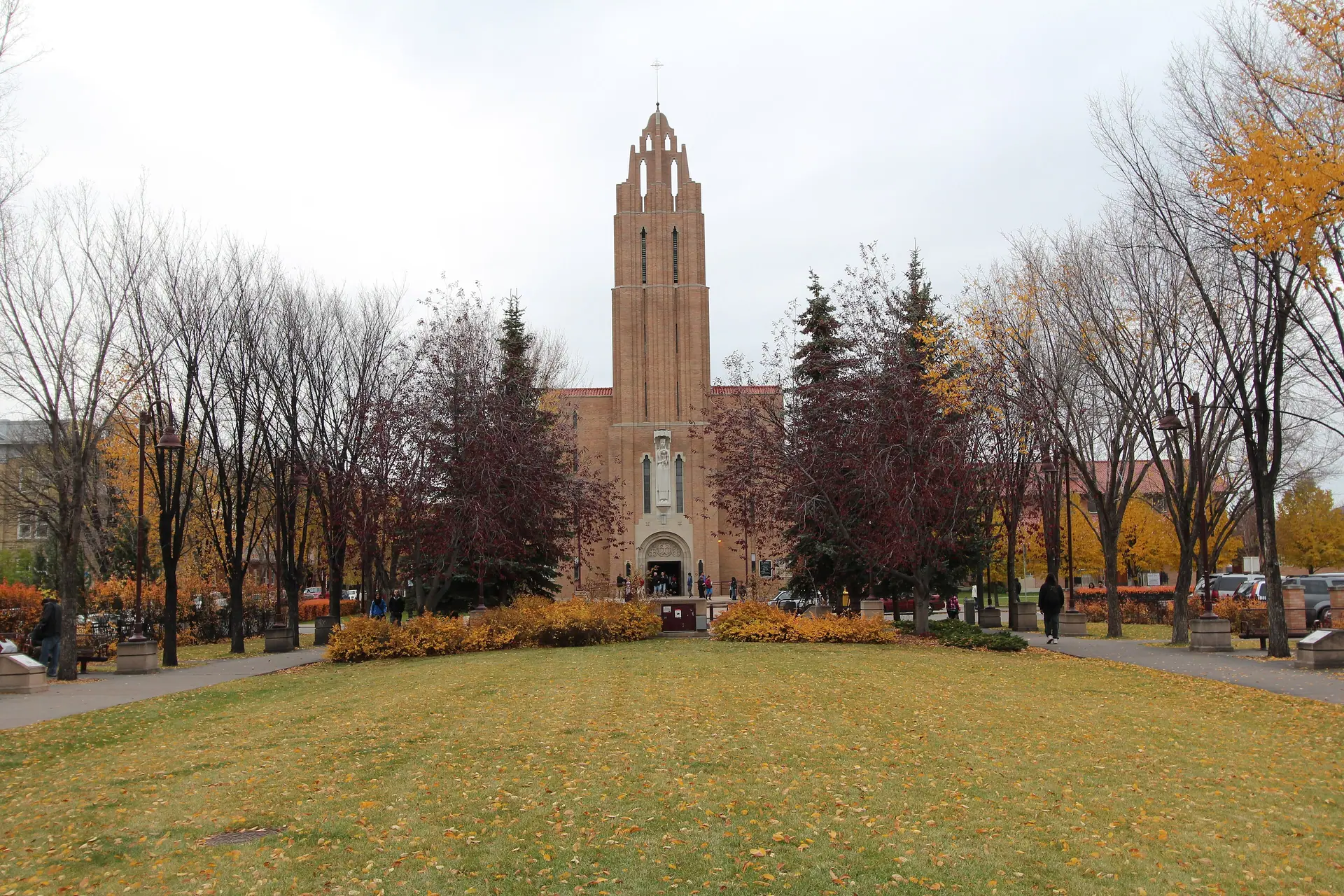
French services in Calgary: every French-language door, verified
Read

Banking, ID and paperwork: your first weeks in Calgary
Read
Housing in Calgary: renting, buying and what it costs
Read