En bref· Quick answer
Calgary's winter is cold but dry and sunny, interrupted by chinook winds that can lift the temperature by 20 degrees in an afternoon. Spring arrives late and wet, summer is short and bright with long evenings and hailstorm risk, and autumn is the prettiest season. Prepare for winter in layers rather than with one heavy coat, equip your car and your home, know the 24-hour sidewalk rule, and then enjoy it: outdoor rinks open in December, the pathways are cleared, and the Rockies are an hour away.
- Property owners must clear snow and ice from public sidewalks next to their property within 24 hours of a snowfall; report uncleared sidewalks to 311 (City of Calgary Street Bylaw).
- The City clears about 400 km of regional pathways within about 24 hours of a snowfall and spends the first 36 hours after a storm on the busiest roads (City of Calgary).
- A Kananaskis Conservation Pass is required to park in Kananaskis Country and the Bow Valley: $15 per day or $90 per year for a personal vehicle (Alberta.ca, checked 2026-11-03).
- Alberta recommends winter tires and a full vehicle emergency kit; there is no mandatory winter-tire period (Alberta.ca).
- Eight City parks have outdoor rinks, including the Bowness Park lagoon and Prince's Island; they open when the ice is safe, typically from mid-December (calgary.ca/rinks).
- The Calgary Stampede runs for ten days each July (2027: July 9–18); Les Rendez-vous de la Francophonie fill the month of March across Canada.
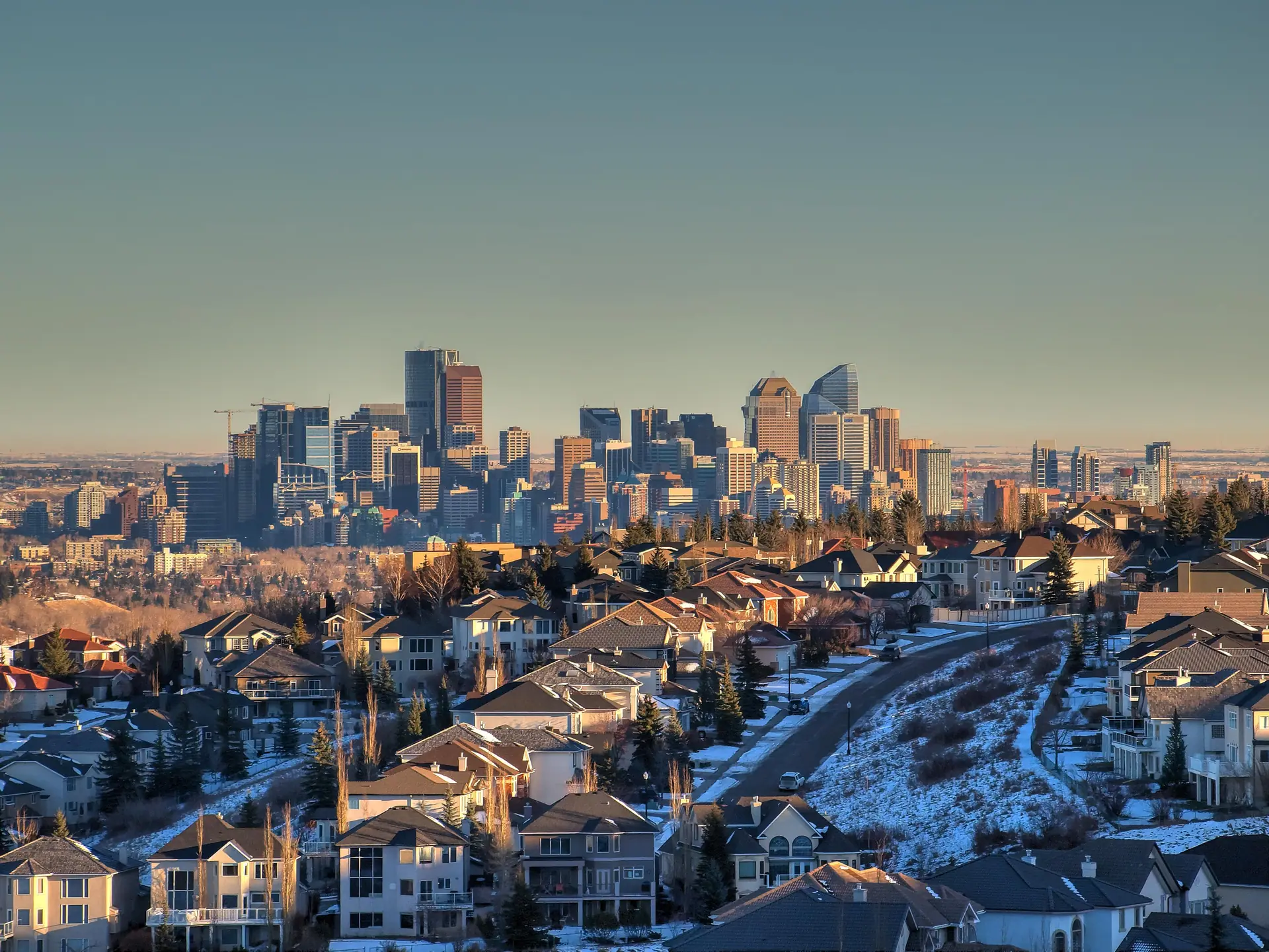
Ask a Calgarian about the weather and you will get a shrug and a story. The shrug is because the city is used to extremes; the story is usually about a chinook that turned −25 °C into +8 °C between breakfast and lunch. Calgary’s climate is not the Quebec winter you may know, and it is not the mild coast either. It is a high, dry, sunny plateau at the foot of the Rockies, and once you understand its rhythm you can dress for it, drive in it and, most years, genuinely enjoy it.
Everything here is general orientation. For actual figures, Environment and Climate Change Canada publishes Calgary’s forecast and the 1991–2020 climate normals; both are linked at the end.
The four seasons, honestly
Winter (November to March, with cameo appearances in October and April). Cold and dry. Snow comes in modest amounts and often disappears again when a chinook blows through. The sun is the surprise: Calgary is one of Canada’s sunniest cities, and a −15 °C day with blue sky and no wind is pleasant to walk in. Cold snaps of −30 °C or colder arrive most winters, usually lasting a few days. Because the air is dry, a given temperature feels less raw than the humid cold of Montreal; because the city is high (over 1,000 m) and open, the wind can undo that advantage in minutes.
Chinooks. Warm, dry westerly winds that descend the mountains and can raise the temperature 15 to 20 degrees in a few hours. You will learn to spot the chinook arch: a clean band of sky over the mountains beneath a lid of grey cloud. Chinooks melt snow into ice overnight, which is why sidewalks and side streets can be treacherous even in mild weather, and why many residents keep ice grippers by the door.
Spring (April to early June). Late, unpredictable and wet. Calgary’s heaviest snowfalls often come in March and April, and a May snowstorm is not unusual. It is also when the river pathways reopen and the city turns green very quickly.
Summer (June to August). Short, bright and dry, with long evenings (sunset after 9:30 p.m. around the solstice) and cool nights. Afternoon thunderstorms roll off the foothills, and the region sits in what meteorologists call hailstorm alley, so comprehensive car insurance earns its premium. In some summers, wildfire smoke from British Columbia or northern Alberta settles over the city for days; Alberta’s Air Quality Health Index map shows conditions in real time on a 1-to-10 scale.
Autumn (September to October). Many locals’ favourite: crisp, golden, stable. The poplars along the Bow turn yellow in late September, and the first snow usually shows up in October and does not stay.
Dressing for a dry cold
The rule is layers, not weight. A wind-resistant outer shell over a warm mid-layer (fleece, wool or down) over a base layer handles most days; add or remove the middle one as a chinook comes or goes. A tuque (bonnet, for readers from France), a neck warmer, insulated gloves or mitts and boots rated well below freezing with real grip are the non-negotiables. Children’s schools expect outdoor play at recess down to cold-weather cut-offs set by each school, so kids need the full kit from November.
Two things newcomers underestimate: sun (snow glare in January is real; sunglasses and sunscreen for skiing) and dryness (lip balm, hand cream and a humidifier in the bedroom make winter noticeably more comfortable).
Your car in winter
Alberta’s winter driving guidance recommends winter or snow tires, which are designed for the cold temperatures and snowy, icy conditions the province gets, and it tells drivers to slow down, triple their following distance on slick roads and never use cruise control in winter. There is no mandatory winter-tire period in Alberta, unlike Quebec’s December 1 to March 15 rule; most Calgary drivers switch in November anyway.
Alberta’s recommended vehicle emergency kit: first-aid kit, fire extinguisher, blanket, extra clothing and footwear, flashlight with spare batteries, candle in a deep tin with waterproof matches, non-perishable food, ice scraper and snow brush, shovel, booster cables, sand or non-clumping kitty litter for traction, rags or paper towel, a road map and your phone.
Calgary-specific habits: a block heater cord hanging from the grille is normal here, and many older homes and condos have plug-in outlets at parking stalls for nights below about −15 °C. Keep your fuel tank above half, keep washer fluid rated to −40 °C topped up, and learn the City’s snow route parking ban system: when the City declares a ban after a big snowfall, you must move off signed snow routes, and the City says crews spend the first 36 hours plowing the busiest routes. Status is posted at calgary.ca/snow and you can sign up for alerts.
Your home and your sidewalk
The 24-hour rule. The City’s Street Bylaw requires property owners to clear snow and ice from the public sidewalks next to their property within 24 hours of a snowfall. Neighbours report uncleared sidewalks to 311 (complaints are not anonymous and can only be filed 24 hours after the last snowfall), and the City can clear them and bill the owner. If you rent a house, check your lease; shoveling is often the tenant’s job. Condo and apartment buildings handle it through management.
Snow Angels. A City program that recognizes neighbours who shovel for seniors or people with limited mobility. The City does not match volunteers with residents; you simply do it, and anyone can nominate a Snow Angel through 311 for a certificate. The campaign runs from December to mid-April. For a newcomer, offering to shovel for the neighbour is one of the fastest ways to meet people.
Inside. Ask your landlord or home inspector about the furnace filter, the hot-water tank, exterior hose bibs (drain them before freeze-up), the sump pump if there is one, and where the water shut-off is. Flat roofs and ice dams are rare here compared with Quebec because of the dry snow, but eavestroughs still need clearing in autumn.
Emergencies. Alberta Emergency Alert (website and app) issues critical and advisory alerts for the province, and the City’s emergency management agency publishes preparedness guidance; keep a basic household kit with water, food, a flashlight and medication for a few days.
Getting outside, season by season
Winter. The City lists eight parks with outdoor rinks, including the Bowness Park lagoon (free skating, an ice trail, ice bikes and crokicurl), Prince’s Island downtown, North Glenmore Park (shinny rink and ice trail), Carburn, Prairie Winds, Big Marlborough, Thomson Family and West Confederation parks. They open when the ice is safe, usually mid-December, and the live status is on calgary.ca/rinks. The pathways stay usable because the City clears about 400 km of them; cross-country skiers use Confederation Park, Shaganappi golf course and the river parks after a good snowfall, and the Canmore Nordic Centre is an hour away. Downhill skiing: Banff’s three resorts and Nakiska in Kananaskis are day trips; the city’s own WinSport hill at Canada Olympic Park teaches beginners within sight of downtown.
Spring. Pathway season reopens. Nose Hill Park, a 1,129-hectare prairie plateau in the northwest, is the place to understand the landscape: native rough fescue grassland, deer, coyotes, hawks and a 360-degree view of the mountains and the city.
Summer. Fish Creek Provincial Park runs across the entire south of the city with a 19-km central pathway, the Bow River, picnic sites and the Sikome aquatic facility. Floating the Bow on a raft from Shouldice Park to Prince’s Island is a Calgary rite of passage (life jackets are mandatory). Community associations run outdoor pools, and the City’s leisure centres have wave pools for the inevitable hail day.
Autumn. Larch season in Kananaskis and Lake Louise (late September) draws the whole city into the mountains on the same two weekends; go on a weekday if you can. The river pathways are at their best.
The mountains
Banff is about an hour and a half west on the Trans-Canada; Kananaskis Country starts about an hour away. Two passes matter:
- Parks Canada pass for Banff National Park (daily or annual Discovery Pass; youth enter free). Lake Louise and Moraine Lake require Parks Canada shuttles with reservations in summer; drones are prohibited.
- Kananaskis Conservation Pass to park a vehicle anywhere in Kananaskis Country and the Bow Valley corridor: $15 per day or $90 per year for a personal vehicle (up to three vehicles on an annual pass), bought online at alberta.ca/conservationpass, by phone or at visitor centres. People arriving on foot, by bike or on horseback do not need one, and low-income Albertans on certain provincial benefits can request a 30-day exemption. Canmore townsite is exempt.
Mountain weather changes fast and avalanche terrain starts right at some trailheads; check 511 Alberta for the highway, Parks Canada trail reports, and, in winter, the avalanche forecast before you go.
Calgary’s calendar, in French and in English
- January–February: outdoor rinks, Chinook Blast winter festival downtown (check current dates), ski season.
- March: Les Rendez-vous de la Francophonie, a month of French-language events across Canada organized by the Réseau dialogue; the ACFA marks the Mois de la francophonie in Alberta, and the ACFA régionale de Calgary programs activities at Maison Rouleau in the Mission district. See our events calendar for verified local listings.
- May–June: pathway season, farmers’ markets reopen, the Lilac Festival on 4 Street SW.
- July: the Calgary Stampede, ten days of rodeo, chuckwagons, concerts and free pancake breakfasts across the city (the 2027 dates are July 9–18). Also the Calgary Folk Music Festival on Prince’s Island.
- August–September: GlobalFest fireworks, Alberta Culture Days (the ACFA régionale de Calgary took part in 2026 with programming featuring Haiti and Cameroon), larch season.
- November–December: Christmas markets, Zoolights at the Calgary Zoo, and the first rinks.
Your next steps
- Driving this winter? Reread the licence, registration and winter-tire sections of getting around Calgary.
- Find free and low-cost things to do year-round in libraries, recreation and free activities.
- Add winter prep to your personal checklist in the newcomer journey.
- Read our explainer your first Calgary winter for the lived-experience version of this guide.
- Check the events calendar for French-language festivals and outings this season.
Questions people ask
How cold does Calgary really get?
Cold snaps of −30 °C happen most winters, usually for a few days at a time, but the typical winter day is far milder and sunny, and chinooks regularly push temperatures above freezing in January. The dry air makes the same temperature feel less biting than in Montreal or Quebec City. Use Environment Canada's climate normals for the actual monthly figures.
What is a chinook?
A warm, dry wind that descends the eastern slopes of the Rockies. It can raise the temperature by 15 to 20 degrees within hours and melts snow quickly. You will recognize it by the 'chinook arch', a band of clear sky over the mountains under a lid of cloud. Some people get headaches when it blows.
Do I have to shovel my sidewalk?
Yes. The City's Street Bylaw requires property owners (and, in practice, tenants of houses, check your lease) to clear the public sidewalk next to the property within 24 hours of a snowfall. Neighbours report through 311, and the City can clear it and bill you.
Is the Stampede worth it for newcomers?
Yes, at least once. The ten-day festival in July takes over the city: free pancake breakfasts in parking lots, rodeo and chuckwagons at Stampede Park, and a city-wide excuse to wear a cowboy hat. Many employers close early. It is also when hotel prices peak.
When do the outdoor rinks open?
When the ice is thick enough, typically mid-December, and they close in late February or March depending on the weather. The City lists eight parks with rinks and updates their status at calgary.ca/rinks.
Can I go to Banff without a car?
Yes. Several bus operators run Calgary–Banff services and Parks Canada runs transit to Lake Louise and Moraine Lake in summer (reservations required for the lakes). With a car you need a Parks Canada pass for Banff and a Kananaskis Conservation Pass for Kananaskis.
Is wildfire smoke a problem?
In some summers, yes, for days or weeks. Alberta publishes an Air Quality Health Index (1 to 10) with a live map; on high days limit outdoor exertion, especially for children, seniors and people with asthma.
Sources and official links
- Environment and Climate Change Canada — Calgary forecastFR/EN
- Environment and Climate Change Canada — Canadian Climate NormalsFR/EN
- City of Calgary — Clearing sidewalks and shoveling snow (Street Bylaw)EN
- City of Calgary — Snow AngelsEN
- City of Calgary — Snow and ice controlEN
- City of Calgary — Pathways and trailsEN
- City of Calgary — Outdoor skating rinksEN
- City of Calgary — Bowness ParkEN
- City of Calgary — Nose Hill ParkEN
- Alberta Parks — Fish Creek Provincial ParkEN
- Alberta.ca — Winter driving tipsEN
- Alberta.ca — Air Quality Health IndexEN
- Alberta.ca — Alberta Emergency AlertEN
- Alberta.ca — Kananaskis Conservation PassEN
- Parks Canada — Banff National ParkFR/EN
- Calgary StampedeEN
- Les Rendez-vous de la FrancophonieFR
- ACFA régionale de CalgaryFR
This page is general information, not legal, immigration, medical or financial advice. Always confirm details with the official source linked.
Keep reading
Getting around Calgary: transit, driving, cycling and the airport
Read
Libraries, recreation centres, sports and free things to do in Calgary
Read
Healthcare in Calgary: your health card, a family doctor, 811 and French-language care
Read