En bref· Quick answer
Calgary is the easiest big Canadian city to shop in: Alberta charges no provincial sales tax, so the sticker price plus 5% GST is what you pay. Groceries come from large chains and a thick layer of international markets; two year-round farmers' markets anchor local food; café culture clusters in Inglewood, Kensington, 17th Avenue and Mission, the old francophone village of Rouleauville. Liquor is sold in private stores, not a government monopoly, and the City sorts household waste into blue, green and black carts.
- Alberta has a 5% GST and 0% provincial sales tax; prices are shown before tax, as everywhere in Canada (Canada Revenue Agency GST/HST rates, checked 2026-11-03).
- Calgary Farmers' Market runs two locations: South (510 77 Avenue SE) and West (25 Greenbriar Drive NW); Crossroads Market (1235 26 Avenue SE) is a year-round market open Friday to Sunday (market websites).
- Mission was the Village of Rouleauville, incorporated in 1899 by about 500 residents around the Oblate mission of Notre-Dame-de-la-Paix (founded 1875); the ACFA's Calgary office is in Maison Rouleau on 1 Street SW (Heritage Inspires YYC, ACFA Calgary).
- Liquor in Alberta is sold through private retailers regulated by AGLC, not a provincial monopoly; grocery stores sell only low-alcohol products in separate sections (AGLC).
- Calgary households use three carts: blue for paper and packaging recycling, green for food and yard waste, black for garbage; the City's 'What Goes Where' tool answers item-by-item questions (calgary.ca).
- Tipping 15 to 20% on restaurant bills and for services is customary; it is not automatic and is not shown on the menu price.
Nobody moves to a city for its grocery stores, and yet the grocery store is where a new city stops being abstract: the brands are different, the bread is different, the tax is different, and the cashier says “how’s it going?” without expecting an answer. This guide covers the everyday economy of Calgary, from the till to the recycling bin, with a detour through the café neighbourhoods, including the one that was once a French-speaking village.
How prices and taxes work
Prices in Canada are displayed before tax, and the tax is added at the till. Alberta’s advantage is that the only tax is the 5% federal GST: the Canada Revenue Agency’s rate table shows 5% GST and 0% PST for Alberta, the lowest combined sales tax of any province. A $100 jacket costs $105; in Quebec it would cost $114.98 and in Ontario $113.
Basic groceries (fresh produce, meat, dairy, bread, most packaged staples) are GST-exempt. Prepared and restaurant food, snacks, alcohol and most other goods are taxed. Some items carry small environmental or deposit fees: beverage containers in Alberta carry a refundable deposit that you recover at a bottle depot, which is why you will see people collecting cans.
Payment is almost entirely cards and tap; cash still works everywhere, cheques almost nowhere. Debit cards from Canadian banks work in every store; foreign cards are usually fine for credit but may not work for debit. Prices for big-ticket items (furniture, appliances, electronics) are often negotiable at independent retailers, rarely at chains.
Groceries: the chains and the markets of the world
Calgary’s grocery landscape has two layers.
The chains are the backbone: Safeway and Sobeys (same company), Save-On-Foods, Calgary Co-op (a genuine local cooperative with a membership and patronage dividend, worth joining if you shop there), Real Canadian Superstore and No Frills (Loblaw), Walmart and Costco. The discount end (Superstore, No Frills, Walmart) is noticeably cheaper than the full-service end; most families mix.
The international layer is where the city surprises newcomers. Calgary’s immigration has given it large Italian, Lebanese and Middle Eastern, Vietnamese, Chinese, South Asian, Filipino, Latin American, Caribbean and West and East African grocery sectors, and French speakers from Africa, the Maghreb, Lebanon and the Caribbean find more of home on the shelf than they expect. Clusters sit along International Avenue (17 Avenue SE), in the northeast around Marlborough and Westwinds, in Chinatown and along Centre Street North, and in strip malls across the city. We do not list individual stores we have not verified; our directory carries French-speaking businesses that asked to be listed, and the francophone events on our calendar are where the best grocery intelligence circulates.
For Quebec and French products specifically: the chains carry some Quebec cheeses, maple syrup and butter, tourtière at Christmas and a rotating set of Quebec brands; European delis and specialty cheese shops carry imported French goods; and the two farmers’ markets below host producers who make the things you miss. Ask; the community is small enough that someone always knows.
Farmers’ markets and local food
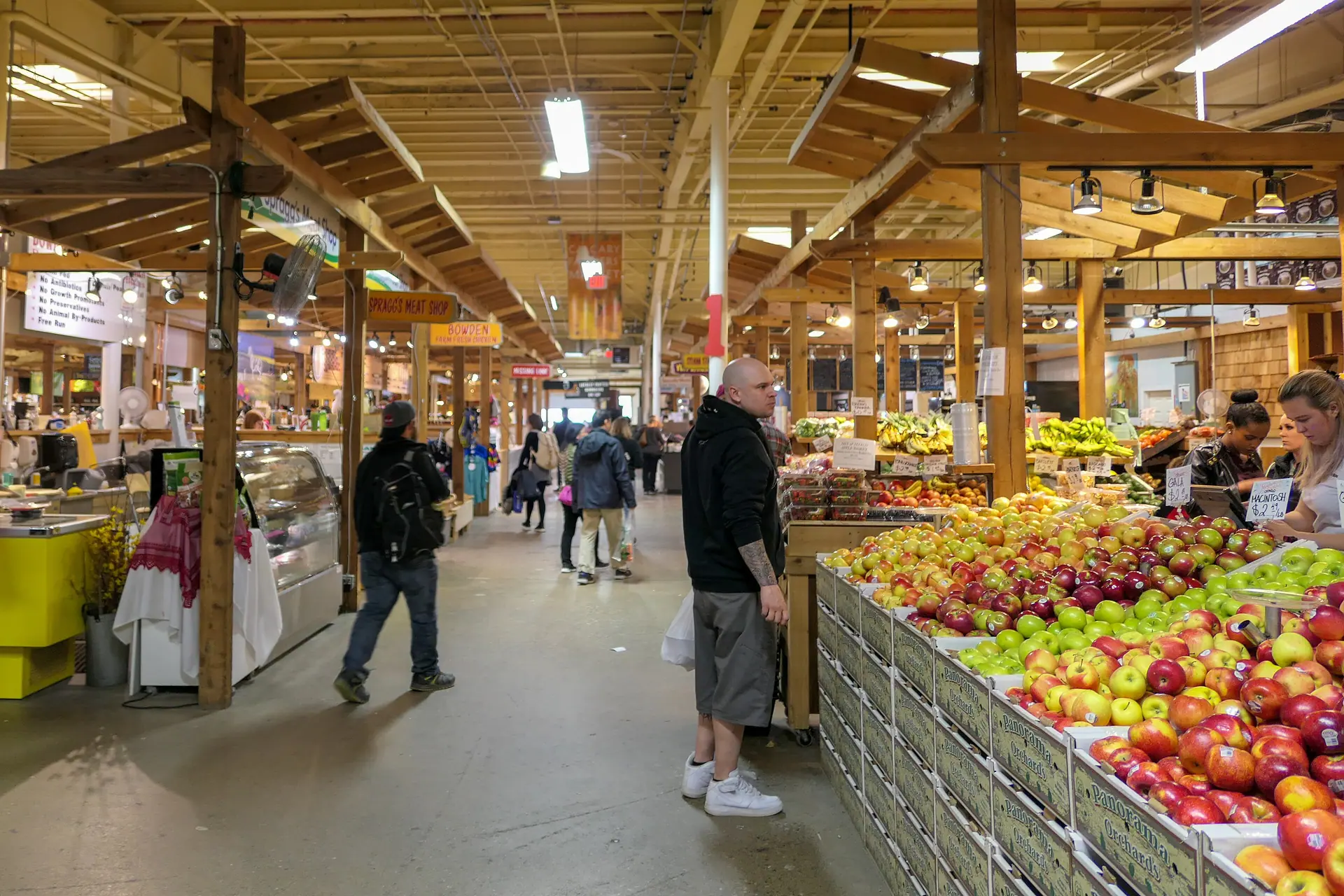
Two year-round markets anchor local food. The Calgary Farmers’ Market has two locations: South at 510 77 Avenue SE and West at 25 Greenbriar Drive NW, with Alberta producers, bakers, cheesemakers, prepared foods and a weekend crowd that treats it as an outing. Crossroads Market at 1235 26 Avenue SE is a year-round market open Friday to Sunday, with a more eclectic mix of produce, flea-market stalls and prepared food. Smaller seasonal markets run in many neighbourhoods and community halls in summer.
Alberta’s agriculture is close: beef, bison, lentils, honey, Taber corn in August, Saskatoon berries in July, and root vegetables that keep all winter. Community-supported agriculture boxes and meat shares from nearby farms are common, and a chest freezer is a normal Calgary appliance.
Cafés and the neighbourhoods where people linger
Calgary drinks a lot of coffee, and its café culture is good and getting better: independent roasters, third-wave cafés and bakeries that would hold their own in Montreal. The neighbourhoods where it concentrates:
- Inglewood, the city’s oldest neighbourhood on 9 Avenue SE, with cafés, record shops, galleries and the river path a block away.
- Kensington, across the Bow from downtown, a walkable village of cafés, bookshops and patios on 10 Street and Kensington Road NW.
- 17 Avenue SW (the “Red Mile” during hockey playoffs), the long restaurant and bar strip west of downtown.
- Mission, on 4 Street SW between 17 Avenue and the Elbow River: cafés, bakeries, bistros, and the street that was once the heart of French Calgary.
- Bridgeland, Marda Loop, Bowness and the East Village each have their own small cluster.
Mission deserves its own paragraph. In 1875, French-speaking Oblate missionaries founded the mission of Notre-Dame-de-la-Paix (Our Lady of Peace), later moved to a site on the Elbow River. Two brothers from Lower Canada gave the district its name: Charles Rouleau, a judge who helped the Faithful Companions of Jesus establish southern Alberta’s first francophone Catholic schooling in 1885, and Dr. Édouard Rouleau, who became chief of medical staff when Holy Cross Hospital opened in 1892. By 1899, about 500 residents had incorporated the Village of Rouleauville, which was later absorbed into Calgary and became Mission. The ACFA’s Calgary office still sits in Maison Rouleau at 1880 1 Street SW, and it organizes heritage walks to the vestiges of Rouleauville. When you sit on a 4 Street patio, you are in the old village.
Restaurants and tipping
Calgary eats out a lot, and the range is wide: Alberta beef in steakhouses, a serious Vietnamese scene (pho and banh mi are everyday food here), Lebanese, Ethiopian, Indian, Japanese, and a bistro and wine-bar culture that has matured in the last decade. Reservations are normal for dinner; lunch is fast; brunch is a weekend institution with queues.
Tipping is where newcomers stumble. The custom is 15 to 20% of the pre-tax bill at any restaurant with table service, in bars, taxis, hair salons and for delivery. Payment terminals now show tip prompts almost everywhere, including counters and cafés where tipping is optional and nobody will mind a zero. Servers in Alberta earn at least the general minimum wage (there is no lower “liquor server” wage any more), but the tip remains an expected part of their income, and it is not included in the menu price. Group bills often carry an automatic gratuity; check before adding.
Liquor: private stores, not a monopoly
Alberta privatized liquor retail in the 1990s. The Alberta Gaming, Liquor and Cannabis commission (AGLC) regulates wholesale, licensing and responsible service, and retail happens in private liquor stores, from small corner shops to large warehouses, often beside a grocery store. Selection is among the widest in Canada and prices vary from store to store, so it pays to compare. Grocery stores themselves sell only products below a low alcohol threshold in a separate section. The legal age to buy and drink is 18. Cannabis is sold the same way, through licensed private retailers.
Beer, wine and liquor containers carry a deposit refunded at bottle depots. Drinking in public parks is restricted; the City designates some picnic sites where alcohol is permitted in summer, and the rules are posted.
Recycling, compost and garbage
The City of Calgary collects household waste in three carts: the blue cart for recycling (paper, cardboard, containers and packaging), the green cart for composting (food scraps, yard waste and soiled paper) and the black cart for garbage (only what cannot be reused, recycled or composted). Collection days and the summer/winter schedule for the black cart are set by address; the City’s “What Goes Where” tool answers item-level questions, and paint, chemicals, batteries and electronics go to Household Hazardous Waste drop-offs rather than the carts. Apartment and condo buildings run their own recycling and organics programs through private haulers, with the same sorting logic.
Second-hand, repairs and the sharing economy
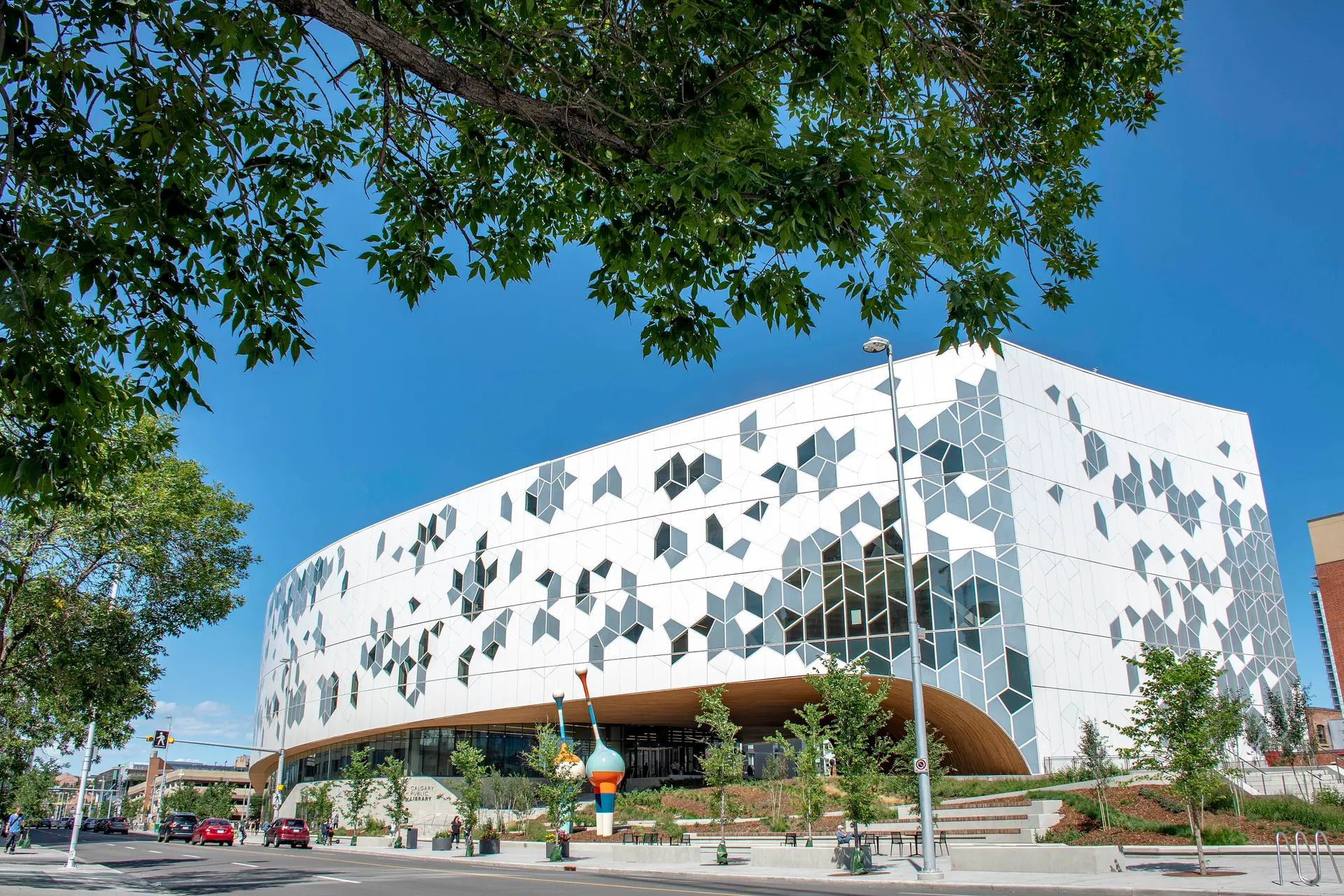
Calgary has a strong second-hand culture: thrift stores run by charities, consignment shops in the inner city, a large online marketplace scene, and community garage sales every spring. For a newcomer furnishing an apartment, second-hand furniture and winter gear are the standard first move, not a compromise. The Calgary Public Library is free to join for residents and lends far more than books, from tools and instruments to passes; its Newcomers Desk and its Thursday presence at La Cité des Rocheuses help French speakers find the collection and services. The City’s Fair Entry program gives low-income residents subsidized access to transit passes, recreation and other services; it is worth checking even if you are only temporarily on a tight budget.
Winter gear: what to buy, and where
The first winter is a shopping project. What you need, in rough order: a parka rated for well below -20°C, insulated waterproof boots with real grip, a tuque, mittens (warmer than gloves), a scarf or neck warmer, base layers, and a windproof shell for chinook days. For children, a one-piece snowsuit. For your car, winter tires (not legally required in Alberta, strongly advisable), a block heater cord, a scraper with a brush, and an emergency kit.
Where: outdoor-gear retailers and cooperatives, department stores, sporting-goods chains, and the second-hand market, which is excellent for children’s gear and skis. We name no brands; the right coat is the one you will actually wear in a Deerfoot wind. Our seasons and winter guide covers how to dress for a Calgary winter day by day.
Your next steps
- Join the Co-op if you will shop there, and the Calgary Public Library regardless; both are free or nearly so and pay back quickly.
- Spend a Saturday morning at one of the two Calgary Farmers’ Market locations or Crossroads Market, then walk 4 Street in Mission and find the Rouleau house.
- Set up your carts: the City’s waste pages tell you your collection day by address.
- Before the first cold snap, read the seasons and winter guide and buy the boots first.
- Looking for French-speaking food businesses or a café where the community meets? Check the directory and the events calendar.
Questions people ask
Why is the price at the till higher than on the shelf?
Canadian prices are displayed before tax. In Alberta only the 5% federal GST is added (no provincial sales tax), which is the lowest total sales tax of any province. Basic groceries are GST-exempt; prepared food, restaurant meals and most goods are taxed.
Where can I find Quebec or French products in Calgary?
There is no single store. Large grocery chains carry some Quebec brands (cheeses, maple products, certain snacks), European delis and the farmers' markets carry imported French goods, and the francophone community trades tips constantly. Search our directory for food businesses and ask at a French-language event; we do not list shops we have not verified.
Is tipping expected?
Yes. Restaurants with table service, bars, hairdressers, taxis and delivery expect 15 to 20%; counters and cafés increasingly present a tip screen, where tipping is optional. The tip is on the pre-tax amount by custom. Servers earn at least the general minimum wage in Alberta, unlike in some countries, but tipping remains the norm.
Can I buy wine at the grocery store?
Not full-strength wine. Alberta's liquor retail is private and regulated by AGLC: stand-alone liquor stores, often next to grocery stores, sell wine, beer and spirits, and the selection is among the widest in Canada. The legal drinking age in Alberta is 18.
Are shops open on Sundays and holidays?
Most retail is open seven days a week, with shorter Sunday hours; grocery stores and pharmacies generally open on statutory holidays with reduced hours, and malls close on a few major holidays. Check each store; the City does not regulate retail hours the way some provinces do.
What are the recycling rules?
Three carts: blue (paper, cardboard, containers, packaging), green (food scraps, yard waste, soiled paper) and black (what cannot be reused, recycled or composted). Paint, chemicals and electronics go to Household Hazardous Waste drop-offs, not the carts. The City's 'What Goes Where' search tool settles arguments.
Sources and official links
- Canada Revenue Agency — GST/HST calculator and rates by provinceFR/EN
- Calgary Farmers' MarketEN
- Crossroads MarketEN
- Heritage Inspires YYC — Mission (Rouleauville) community historyEN
- ACFA régionale de Calgary — Maison RouleauFR
- AGLC — LiquorEN
- City of Calgary — Waste and recyclingEN
- Calgary Public Library — Join (free membership)EN
- City of Calgary — Fair Entry (subsidized programs for low-income residents)EN
This page is general information, not legal, immigration, medical or financial advice. Always confirm details with the official source linked.
Keep reading
Getting around Calgary: transit, driving, cycling and the airport
Read

Calgary seasons, winter preparation and the outdoors
Read
Libraries, recreation centres, sports and free things to do in Calgary
Read