En bref· Quick answer
Québec City and Calgary are both roughly a million people in their metropolitan regions, and the resemblance ends there. You are leaving a provincial capital where government, insurance, universities and health care anchor the workforce for a city whose economy is private, energy-weighted and fast-moving; a walled old town for a 1950s-to-today grid of quadrants; the snowiest big city in Canada for a drier, sunnier, colder-at-night winter softened by chinooks; and a place where French is simply the air for one where it is a community you join. The administrative steps (RAMQ to AHCIP, SAAQ to Alberta plates, the December 31 tax rule, section 23 schools) are the same for every Quebecer and live in our pillar guide; this page covers what is specific to leaving the capital.
- Non-stop Québec City–Calgary flights run in summer only, on Air Canada and WestJet; the rest of the year you connect, usually through Montréal or Toronto (YYC airlines and destinations page, checked 2026-11-03).
- Québec International lists the capital region's key sectors as life sciences, ICT, optics-photonics, food, green building, insurance and financial services, AI and manufacturing; Calgary Economic Development anchors Calgary's on energy and environment, technology, financial services, agribusiness, aerospace and defence, life sciences, film and logistics (both checked 2026-11-03).
- You have 90 days after becoming an Alberta resident to exchange your Quebec licence (no tests) and re-register your vehicle after an out-of-province inspection; apply for AHCIP within 3 months (Alberta.ca, checked 2026-11-03).
- Section 23 of the Charter gives French first-language rights holders the right to French schooling; in Calgary that is the Conseil scolaire FrancoSud, headquartered in the city (FrancoSud and Alberta.ca, checked 2026-11-03).
- In southwestern Alberta about one winter day in three is a chinook day; Calgary's snow comes in smaller, more frequent doses that often melt within days (The Canadian Encyclopedia, checked 2026-11-03).
- A 2026 Calgary Transit adult fare is $4.00 for 90 minutes; a monthly pass is $126.00; the CTrain has two lines (Calgary Transit, checked 2026-11-03).
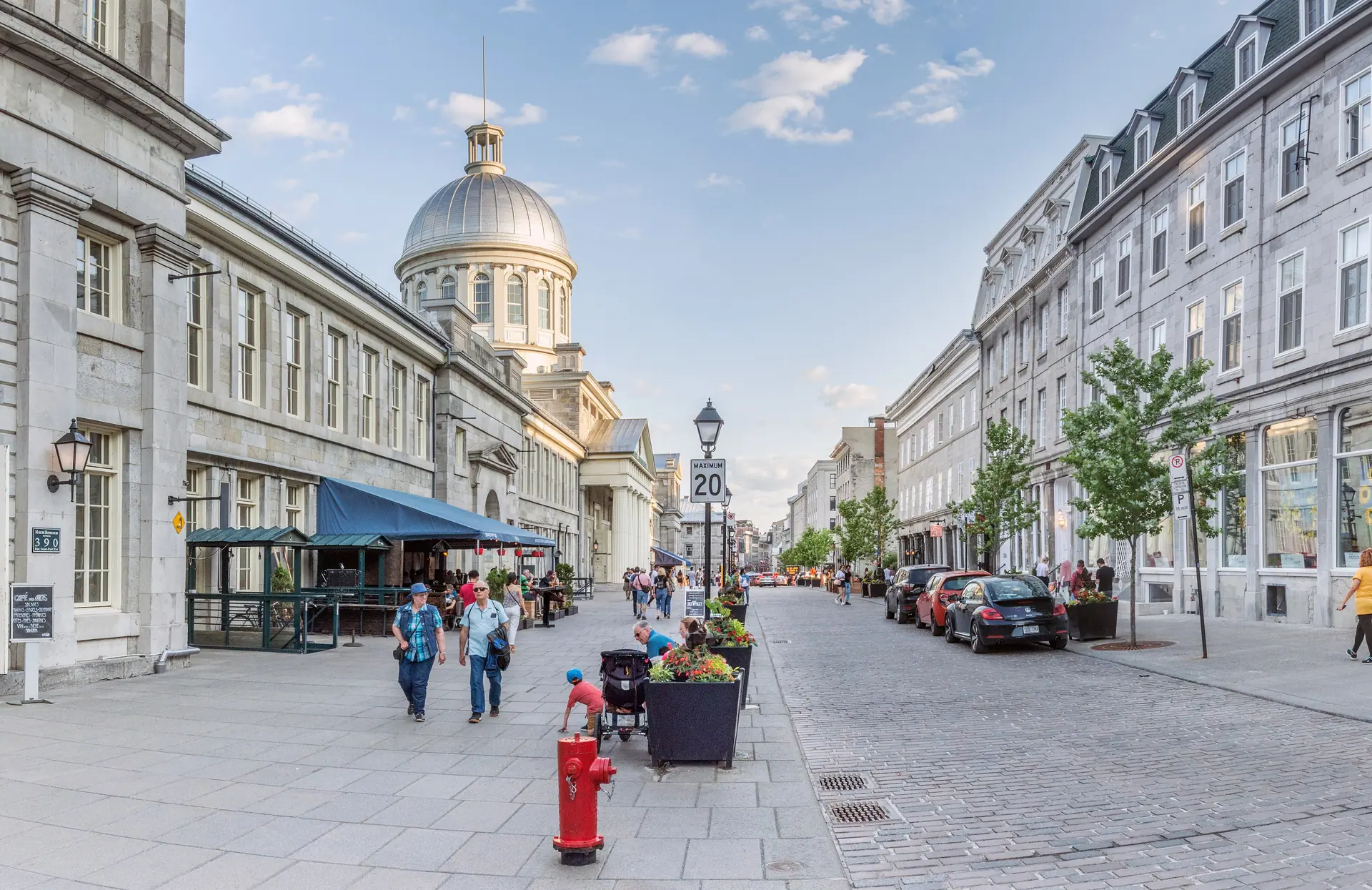
People from Québec City carry a particular relationship to their town: it is old, it is beautiful, it is compact, it is overwhelmingly French, and a lot of the people you know work, directly or indirectly, for the government, the universities, the hospitals or the insurance companies. Calgary is almost the opposite on every axis: young, spread out, visually dramatic only when you look west, overwhelmingly English, and powered by private companies whose fortunes move with commodity prices and technology cycles. That contrast is why the move can be exhilarating and why the first winter can feel lonely. This page is about preparing for both.
The paperwork is the same for every Quebecer and is laid out, step by step and with sources, in the pillar guide to moving from Quebec: RAMQ to AHCIP, SAAQ licence and plates to Alberta, the December 31 tax rule, QPP, daycare funding and section 23 schools. We will not repeat it all here. If you are coming from Montréal rather than the capital, the Montréal page is the better companion.
Work: from a capital economy to a private one
Québec International, the capital region’s economic development agency, describes the region’s key sectors as life sciences and health technologies, information and communications technology, electronics and optics-photonics, food and nutrition, green and smart building, insurance and financial services, artificial intelligence and manufacturing. What that list leaves out, because it is obvious to anyone who lives there, is the public sector: the National Assembly, the ministries, the hospital network, Université Laval and the broader public administration are the quiet backbone of the city’s employment, and they make the capital’s economy unusually stable.
Calgary’s economy is described by Calgary Economic Development as anchored in energy and environment, technology, financial services, agribusiness, aerospace and defence, life sciences, film and television, and transportation and logistics. The texture is different: head offices rather than ministries, project-based hiring, more volatility, more opportunity, and a culture where people change employers more often. Government exists here too (the City of Calgary, Alberta’s provincial departments with Calgary offices, federal agencies), but it does not set the tone.
Three practical consequences for someone leaving the capital:
- Your profession may need re-recognition. Regulated professions (engineering, nursing, medicine, pharmacy, teaching, law, accounting, architecture, social work) are governed by Alberta bodies, and membership in a Quebec order does not transfer automatically. Start that process before you move; it can take months. Alberta’s alis site has occupation profiles with the regulator named for each, and our work and business guide walks through the steps.
- Bilingualism is an asset, not a requirement. Federal departments, airlines, national call centres, the francophone school board and community organisations, and companies with Quebec operations value French; most Calgary employers do not require it. Your English will be tested in interviews in a way it was not in Sainte-Foy.
- Networks matter more. The capital’s hiring runs through competitions and classifications; Calgary’s runs through referrals. The francophone business network (Parallèle Alberta, the ACFA’s Calgary office, the Alliance Française’s events) is small enough that a few evenings will put you in front of people who hire. The network and events pages are built for that.
Housing: from the Haute-Ville to the quadrants
Québec City’s housing rhythm follows the same July 1 moving day and Tribunal administratif du logement rules as the rest of the province; Calgary has neither. Leases start any day, run twelve months and roll to month-to-month; there is no rent control (increases are limited to once every 365 days with written notice, three full months on a month-to-month tenancy, and are not allowed during a fixed term), and security deposits of up to one month’s rent are standard. For prices, CMHC’s Rental Market Report is the only like-for-like source: the 2025 edition gives Calgary a 5.0% purpose-built vacancy rate and an average two-bedroom rent of $1,914, with a Québec City section in the same report for comparison.
The geography takes longer to learn than the rules. Québec City is legible: the Haute-Ville and Basse-Ville, Saint-Roch, Limoilou, Sainte-Foy, Charlesbourg, Beauport, Lévis across the river. Calgary is a grid of four quadrants (NW, NE, SW, SE) around a compact downtown; addresses carry the quadrant, and the Bow River and Centre Street are the dividing lines. A loose translation for people from the capital, offered as orientation and not as advice:
| If you lived in | Look first at | Why |
|---|---|---|
| Saint-Jean-Baptiste, Montcalm, Saint-Roch | Beltline, Mission, Kensington/Sunnyside, Inglewood | Dense, walkable, cafés and venues, close to the core |
| Limoilou | Bridgeland, Renfrew, Ramsay | Older grid streets, main-street feel, near the rivers |
| Sillery, Sainte-Foy (older parts) | Elbow Park, Mount Royal, Altadore, Britannia | Established, treed, near the Elbow River, pricier |
| Charlesbourg, Beauport, Lévis, L’Ancienne-Lorette | Newer suburban communities in each quadrant; Airdrie, Cochrane, Okotoks | Space, new builds, car-based, lower price per square foot |
| Near Université Laval | University District, Varsity, Brentwood (NW) | Near the University of Calgary and the Red Line |
Where the FrancoSud schools are will matter more to a francophone family than any of this; the childcare and schools guide maps them, and the neighbourhood explorer compares every community with City of Calgary data.
Winter: Carnaval snow versus chinook cold
Québec City winters are defined by snow: deep, constant, piled into walls by February, celebrated at Carnaval. Calgary winters are defined by cold and light. The city gets far less snow, in smaller and more frequent doses, and chinooks, the warm, dry west winds off the Rockies, often melt it within days; the Canadian Encyclopedia notes that in southwestern Alberta about one winter day in three is a chinook day. Between chinooks, cold snaps of -30 °C and below arrive a few times a season, usually under a cloudless sky, and the dry air makes them feel sharper but less penetrating than a humid -18 °C on the Grande Allée.
What changes in practice: you will shovel far less, you will not need the snowblower, your car will see more black ice than snowpack, and you will want sunglasses in January. Winter tires are required in Quebec from December 1 to March 15; Alberta has no such law, but anyone who drives west toward the mountains keeps them on. 511 Alberta is the road-conditions service. For the numbers, Environment and Climate Change Canada’s climate normals for Québec City and Calgary International airports sit side by side on the same site; our seasons and winter guide turns Calgary’s into advice.
Getting there: flights, the drive and the car
Non-stop Québec City–Calgary flights are seasonal: YYC’s airlines and destinations page lists Air Canada and WestJet service from Québec City in summer only. The rest of the year you connect, usually through Montréal or Toronto, which turns a five-hour trip into a seven- to nine-hour day. Many people from the capital drive to Montréal-Trudeau, where Air Canada and WestJet fly to Calgary year-round, and park for the trip. The two-hour time difference means evening flights east land late.
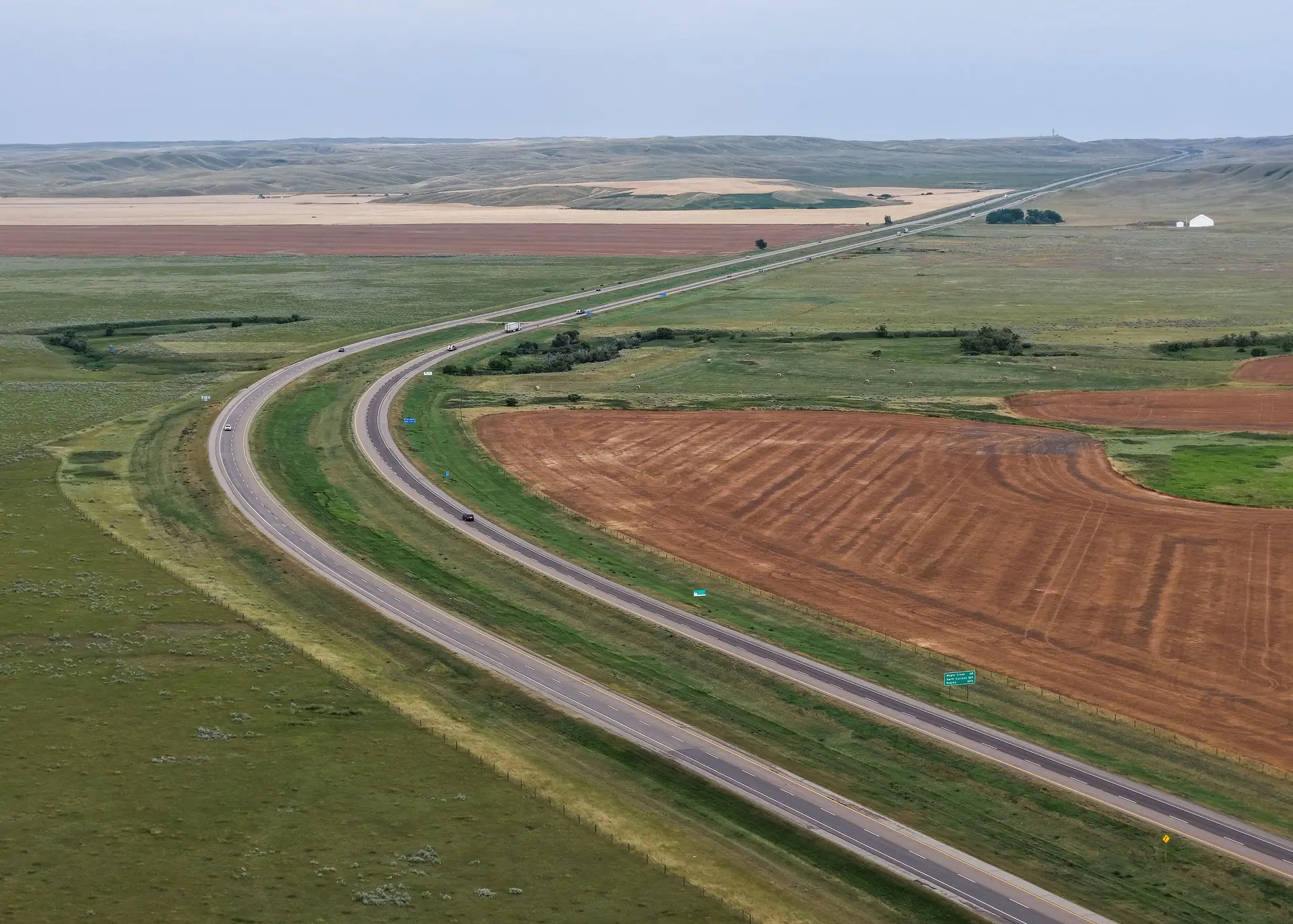
Driving, Québec City to Calgary is roughly 3,850 km by the Trans-Canada through Montréal, Ottawa, northern Ontario, Winnipeg, Regina and Medicine Hat, five days with sensible stops, longer in winter. The pillar guide covers the route, the gaps in services north of Lake Superior, prairie crosswinds, movers and the Canadian Association of Movers’ consumer resources. The vehicle itself follows the standard Alberta timeline: out-of-province inspection, then registration and Alberta plates within 90 days, then cancel the Quebec plates with the SAAQ for a partial refund.
Health and schools: the two handovers that matter most
Québec City residents are used to a CLSC on the corner and a Guichet d’accès that, however slow, is in French. In Calgary, health care is run by Alberta Health Services and the daily tools are Health Link at 811 (nurse advice, with interpretation available), walk-in clinics and family doctors who are in short supply, so start looking for one before you arrive. The handover itself follows the Alberta rule for every Quebecer: apply for AHCIP within 3 months of establishing residency; coverage starts on the first day of the third month after you did, and your RAMQ card covers you until then. Prescription-drug coverage is different: the RAMQ public plan stops the day you leave, so line up an employer or private plan. Our healthcare guide explains the system and where to find French-speaking practitioners.
For children, your section 23 right travels with you. Citizens whose first language is French, or who received primary instruction in French in Canada, can enrol their children in the Conseil scolaire FrancoSud’s public or Catholic French schools; FrancoSud’s admission page lists the rights-holder categories and the case-by-case exceptions. Alberta’s K–12 system has no cégep: secondary school ends at grade 12 and students go straight to university or college. French immersion, run by the English boards, is a separate program for non-francophones and is not the right fit for a child arriving from a French school in Beauport. Daycare does not follow Quebec’s CPE model either; Alberta funds licensed providers through affordability grants and spaces are not centrally assigned, so call programs early. The childcare and schools guide has the details and the school map.
Transit and daily movement
Québec City’s RTC bus network is the city’s transit spine; Calgary’s is the CTrain, a two-line light-rail system (Red and Blue) crossing downtown at street level, plus buses and bus rapid transit. A 2026 adult fare is $4.00 for 90 minutes and a monthly pass is $126.00. The CTrain is good for commuting into the core and reaching the university and hospitals from a station-adjacent neighbourhood; most Calgary households own a car and plan around it. The City maintains about 1,000 km of regional pathways, and cycling to downtown from the inner city is pleasant and flat. Our getting around guide explains fares, the airport connection and winter driving.
Living in French on purpose
Québec City is the most French big city in North America; French is not a community there, it is the city. Calgary’s francophonie is a community in the literal sense: institutions, events and people you choose to join. Alberta’s Francophone Secretariat coordinates the province’s French Policy, FrancoSud runs the French schools, the Cité des Rocheuses is the cultural centre, the ACFA has a Calgary regional office, the Alliance Française teaches and hosts, and a network of French-speaking daycares, health navigators, professionals and businesses exists if you know where to look. Our French services guide and directory are the shortcut.
Two things people from the capital notice that Montrealers often do not:
- The English will come faster than you expect, and you will want it. Québec City lets you live entirely in French; many professionals from the capital arrive in Calgary with less daily English practice than their Montréal counterparts. Six months of work and errands fix that. The learn section has English practice built for French speakers navigating Calgary.
- The francophonie here is pan-Canadian and international. Franco-Albertans, Acadians, Franco-Ontarians, French, Belgians, Swiss, Maghrebis, West and Central Africans, Haitians, Lebanese and Vietnamese share the room with Quebecers. The accent of the capital is recognised and enjoyed; the assumption that everyone shares Quebec’s history is not.
Homesickness peaks around month three. Plan a trip home for the first holidays before you leave, and find your first French event in the first two weeks; the events calendar is moderated and every entry has a source and a last-checked date.
Your next steps
- Do the paperwork in order with the pillar guide and the newcomer checklist.
- Start professional recognition early through the Alberta regulator for your field; the work and business guide lists them.
- Shortlist neighbourhoods with the explorer and read renting in Calgary.
- Map the FrancoSud schools in the childcare and schools guide before you choose a quadrant.
- Find the French: services guide, directory, events.
Questions people ask
Is there a direct flight from Québec City to Calgary?
Only in summer. YYC's airlines and destinations page lists Québec City service by Air Canada and WestJet as seasonal (summer). Outside that window you connect through Montréal or Toronto, which adds two to four hours. Many people from the capital drive to Montréal-Trudeau for year-round non-stops.
Will my Quebec public-sector experience transfer?
Your experience does; your employer category changes. Alberta's provincial public service and the City of Calgary hire, but Calgary's economy is dominated by private employers. Federal jobs exist in Calgary and often value bilingualism. If your profession is regulated (engineering, nursing, teaching, law, accounting), check the Alberta regulator before you move; Quebec orders do not transfer automatically.
Is Calgary snowier than Québec City?
No. Québec City is one of the snowiest big cities in the country; Calgary gets less snow, in smaller doses, and chinook winds frequently melt it within days. Calgary is colder on the coldest nights and far sunnier. Check Environment Canada's climate normals for both airports if you want the numbers side by side.
Can my children go to French school in Calgary?
Almost certainly, if you are a Canadian citizen whose first language is French or who went to French school in Canada. Section 23 of the Charter gives you that right, and the Conseil scolaire FrancoSud provides it in Calgary with public and Catholic French schools. French immersion is a different program for non-francophones.
How do licence, plates and health card work?
Exactly as for any Quebecer: AHCIP within 3 months (coverage starts the first day of the third month after you establish residency; your RAMQ card covers you until then), licence exchanged within 90 days with no test, vehicle inspected and registered within 90 days. The pillar guide has every step with sources.
Is Calgary's cost of living lower than Québec City's?
Some lines go down (no provincial sales tax, one tax return, generally lower provincial income tax) and some go up (private auto insurance, daycare for families without a subsidized CPE space, rent in the inner city). Use CMHC's Rental Market Report for both cities rather than anecdotes, and read our housing-costs guide for the Calgary side.
Sources and official links
- Québec International — economic development agency for the Québec City regionFR/EN
- Calgary Economic DevelopmentEN
- Life in Calgary (Calgary Economic Development)EN
- alis — Alberta careers, learning and employment informationEN
- YYC Calgary International Airport — Airlines and destinationsEN
- 511 Alberta — road conditionsEN
- The Canadian Encyclopedia — ChinookFR/EN
- Environment and Climate Change Canada — Canadian Climate NormalsFR/EN
- Calgary Transit — Fares & passesEN
- City of Calgary — Pathways and trailsEN
- Alberta.ca — Apply for health care coverage if you move to AlbertaEN
- Alberta.ca — Exchange a licence from outside AlbertaEN
- Alberta.ca — Register a vehicle in AlbertaEN
- Alberta.ca — Moving to Alberta from within CanadaEN
- Conseil scolaire FrancoSud — Inscription et admissibilitéFR
- Alberta.ca — French-language educationEN
- Canadian Charter of Rights and Freedoms, section 23FR/EN
- CMHC — Rental Market Report (major centres)FR/EN
- Alberta.ca — During a tenancy (rent increases, notice)EN
- Alberta.ca — Francophone SecretariatEN
This page is general information, not legal, immigration, medical or financial advice. Always confirm details with the official source linked.