En bref· Quick answer
Moving from Quebec to Calgary is an interprovincial move, so there is no immigration paperwork, no new SIN and no bank change, but a handful of deadlines bite early: register for Alberta health coverage within 3 months (your RAMQ card stops on the first day of the third month after you arrive), exchange your Quebec licence and re-register your car within 90 days, and remember that the province where you live on December 31 taxes your whole year. The rest is logistics and adaptation: a drier, sunnier, colder-at-night climate; private car insurance instead of the SAAQ; a daycare system built on provincial grants rather than CPE places; French schools you may have a constitutional right to; and a francophone community that is smaller than home but real, organized and glad to see you.
- Your Quebec health coverage ends on the first day of the third month after you arrive in Alberta; apply for AHCIP within 3 months of arrival and keep using your RAMQ card until then (RAMQ and Alberta.ca, checked 2026-11-03).
- You have 90 days after becoming an Alberta resident to exchange your Quebec driver's licence (no knowledge or road test) and to re-register your vehicle, which first needs an Alberta out-of-province inspection (Alberta.ca, checked 2026-11-03).
- You file your whole year's income tax in the province where you have your most significant residential ties on December 31; sever Quebec ties and you generally file only an Alberta return (Revenu Québec and CRA, checked 2026-11-03).
- Alberta has no provincial sales tax; the 2026 Alberta income tax starts at 8% on the first $61,200 of taxable income (Alberta.ca, checked 2026-11-03).
- Alberta auto insurance is bought from private insurers, and basic coverage is mandatory; there is no SAAQ-style public plan (Alberta.ca, checked 2026-11-03).
- Daycare: licensed programs that take Alberta affordability funding charge a flat $326.25 a month for full-time care for children up to kindergarten age, not $-a-day CPE rates (Alberta.ca, checked 2026-11-03).
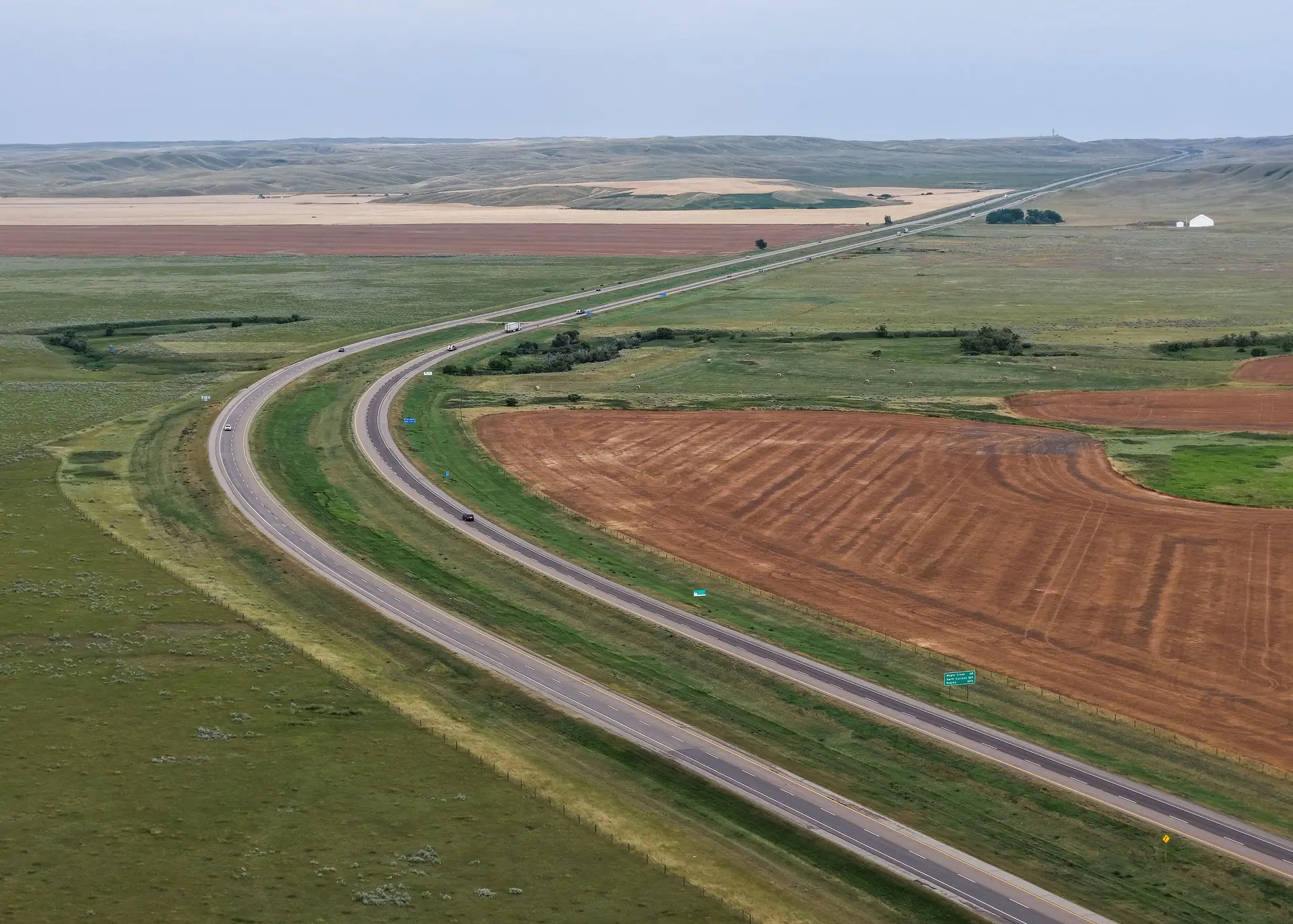
Somewhere on the Trans-Canada between Thunder Bay and Winnipeg, most people who have made this move report the same thought: “Have I really done this?” You have. And by the time the Rockies appear as a low blue line west of Brooks, you will want to have the paperwork already in motion, because Alberta’s deadlines do not wait for you to settle in.
This guide is written for people leaving Quebec for Calgary, whether you grew up in Trois-Rivières, arrived in Montréal from Dakar ten years ago, or are a franco-Ontarian who has been living in Gatineau. It covers what changes (health card, licence, plates, taxes, insurance, daycare, school) and what does not (your SIN, your bank, your RRSP and TFSA, your citizenship or status). It also covers the part no government page explains: what it feels like to go from a French majority to a French minority, and where to find your people when you arrive.
Two companion pages go deeper into city-specific comparisons: moving from Montréal and moving from Québec City.
Why Quebecers move to Calgary, and why it is a different kind of move
An interprovincial move is administratively simple compared to immigration. There is no visa, no permit, no medical exam. You keep your Social Insurance Number, your bank accounts, your credit history, your registered savings and your Canadian passport. What changes is which province administers your health care, your driving, your taxes and your children’s schooling, and each of those has a handover window.
People make the move for work, for family, for the mountains, for a lower overall tax bill, or because a partner’s job moved. Statistics Canada publishes annual estimates of interprovincial migration by province of origin and destination in Table 17-10-0022-01 if you want the real numbers rather than anecdotes; we do not reproduce figures here because the table is revised every year and the current release is the one that matters.
What matters more for your planning is this: Calgary is a large, spread-out city on the edge of the prairie, roughly an hour’s drive from the mountains, with four quadrants (NW, NE, SW, SE) organised around a compact downtown and two rivers, the Bow and the Elbow. It is a driving city with a useful rail spine, the CTrain. It is sunny, dry, windy and high, at roughly 1,000 metres of elevation. And it has a francophone community that is proportionally small but institutionally complete: a French school board, a cultural centre, a community association with provincial reach, French daycare, French health navigation and a calendar of events. You will not live in French by default the way you did in Lévis. You can live in French on purpose.
The timeline: three months before, arrival, and the first 90 days
The table below is the spine of this guide. Print it, or use the interactive version in our newcomer checklist, which lets you tick things off and save progress without an account.
| When | What to do | Why it matters |
|---|---|---|
| 3 months before | Line up housing, a mover or a truck, and a school/daycare plan. Order a copy of your driving record and insurance history from your Quebec insurer. | Calgary rentals move fast; insurers in Alberta will ask for your claims history. |
| 1 month before | Give notice to Hydro-Québec, your telecom and your landlord. Book the vehicle’s trip. Gather originals: birth certificates, proof of citizenship or status, marriage certificate, school records, vaccination records. | Alberta registries and AHCIP ask for originals or certified copies. |
| Day of arrival | Note your arrival date. It starts the RAMQ clock, the AHCIP clock and the 90-day driving clocks. | Every deadline below counts from this date. |
| First 2 weeks | Visit a registry agent: apply for AHCIP, exchange your licence, start the vehicle inspection. Set up Alberta auto insurance. | Insurance must be in place before the car can be registered. |
| First month | Register children for school or daycare. Update your address with the CRA, your bank, your employer and Élections Canada. Get a Calgary Public Library card (free). | Library membership is one of the fastest ways to feel at home. |
| By day 90 | Licence exchanged, vehicle registered with Alberta plates, AHCIP application submitted. Cancel Quebec plates with the SAAQ for a refund. | Past 90 days you are driving on an expired obligation. |
| First winter | Winter tires on by late October. Learn what a chinook is. Find your French events. | See the climate section; see events. |
Health care: from RAMQ to AHCIP
This is the deadline most people get wrong, so read it twice.
When you settle in another province, RAMQ stops covering you on the first day of the third month following your arrival. RAMQ’s own example: a person arrives in British Columbia on June 10 to take up residence; her Quebec coverage ends September 1. Between arrival and that date you remain covered by Quebec for services outside Quebec. You must contact RAMQ to report your departure and return your health insurance card.
On the Alberta side, if you plan to live in Alberta for 12 months or more, you must apply for the Alberta Health Care Insurance Plan (AHCIP) within 3 months of establishing residency. Coverage begins on the first day of the third month following the date you established residency. If you apply late, your coverage start date moves to when you register, which can leave you with a gap. Until Alberta coverage starts, Alberta tells you to keep using your previous province’s health card, which is exactly what RAMQ’s rule allows.
Apply at a registry agent (the private offices that handle government registrations across Alberta; find one on the Alberta.ca registry agent lookup). Bring proof of identity, proof of Alberta residency (a lease, utility bill or employer letter with your Calgary address) and proof of legal entitlement to be in Canada. If your spouse and children arrive later, Alberta says you can keep the family on your previous province’s coverage for up to 12 months; their Alberta coverage starts on the first day of the third month after they arrive.
Once you are covered, the basics you may need: Alberta uses Health Link at 811 for nurse advice (interpretation is available), walk-in clinics for minor care, and family doctors who are in short supply, so start looking early. Our healthcare guide walks through all of it, including where to find French-speaking practitioners.
Driving: licence, plates, inspection and insurance
Alberta gives you 90 days after becoming a resident to exchange your driver’s licence, and the 90 days keep counting even if you travel outside Alberta during that period. Licences from other Canadian provinces are exchanged without a knowledge test or a road test. You surrender your Quebec licence (and any other licence you hold, even expired) to a registry agent and show proof of Alberta residence and of legal status in Canada. Drivers who would fall under Alberta’s graduated licensing program may be placed on probation.
Your vehicle also has 90 days. Before Alberta will issue plates, a vehicle registered elsewhere in Canada must pass an out-of-province vehicle inspection. The sequence:
- Buy a Request for Vehicle Inspection form at any registry agent.
- Take the car and the form to a licensed inspection facility. A journeyperson technician does the inspection, typically up to about two hours; facilities set their own fees.
- If it fails, repairs must be done within 10 days or a full new inspection is required.
- Present the Out-of-Province Vehicle Inspection Certificate to a registry agent within 14 days, with proof of ownership, proof of valid Alberta insurance in your name, and acceptable ID.
Then write to the SAAQ. Once the car carries Alberta plates you can cancel the Quebec registration and get a partial refund by sending the SAAQ’s cancellation form with a copy of the Alberta registration certificate.
Insurance: from the SAAQ to private insurers
Quebec’s public-private hybrid (the SAAQ covers bodily injury, your insurer covers the car) does not exist in Alberta. Here, basic automobile insurance (accident benefits and third-party liability) is required by law and is sold by private insurers licensed in Alberta; collision and comprehensive are optional. The Automobile Insurance Rate Board regulates rates. Alberta has announced a transition to a “Care-First” model starting January 1, 2027; the details are on Alberta.ca and will matter if you are shopping for a policy around that date.
Practical advice from people who have done it: ask your Quebec insurer for a letter confirming your years insured and claims history before you leave. Alberta insurers price new arrivals partly on that history, and a letter is faster than a records request from Calgary.
Taxes: the December 31 rule
Individuals report income and pay tax for the year in the province where they are resident for tax purposes on December 31. If you leave Quebec for another province during the year, you are considered resident solely in the province with which you have the most significant residential ties on that date.
Revenu Québec’s own example is the clean case: a single person with no children who gives up his Quebec apartment on June 1, moves to another province and keeps no Quebec residence is not a Quebec resident on December 31 and is generally not required to file a Quebec return. The messy case is also theirs: a person who takes a job in Alberta and rents an apartment there but keeps the family home in Montréal where the spouse and children live remains a Quebec resident, because the home and family are significant residential ties, and must file a Quebec return on worldwide income.
In other words, the move changes your tax province only if you actually move your life. The CRA says the same thing from the other side: use the income tax package for the province where you lived on December 31.
A few practical notes:
- Advance payments of Quebec tax credits (for example the solidarity credit) may have to be repaid for the part of the year you were not a resident; Revenu Québec flags this on its leaving-Quebec page.
- RRSP, TFSA, RESP, FHSA are federal; nothing changes except the provincial tax rate on withdrawals. Tell your financial institution your new address.
- Quebec Pension Plan: you keep every dollar of contributions. The QPP and the CPP are coordinated; if you worked in Quebec and elsewhere in Canada and live outside Quebec at retirement, you apply under the CPP and both plans’ contributions count.
- The Alberta difference: Alberta has no provincial sales tax, so the only sales tax at the till is the 5% federal GST. On income, the province’s 2026 schedule starts at 8% on taxable income up to $61,200, rising through 10%, 12%, 13% and 14% to 15% above $370,220, with what Alberta describes as the highest basic personal amount among provinces. There is no Quebec Health Services Fund contribution, no Quebec prescription drug premium through the tax return, and only one return to file instead of two.
Utilities, telecom and the paper trail you leave behind
Hydro-Québec lets you terminate an electricity service contract without transferring it, from the Customer Space; do it a few weeks before your move date so the final reading is not estimated. Your telecom provider (Bell, Vidéotron, Telus, Fizz or another) has a moving or cancellation process; check whether your plan can simply follow you, since the big national carriers serve Calgary and you may keep your number. Internet providers in Calgary are different companies from Quebec’s, so expect a new contract.
Update your address with: the CRA, Revenu Québec (for the final return), your bank and credit cards, Élections Canada, your employer and pension administrators, your insurance company, your professional order or licensing body, and Canada Post (mail forwarding is worth the fee for the first year; a surprising number of documents arrive after you leave).
Hiring a mover, or driving a truck across the country
Montréal to Calgary is roughly 3,600 kilometres by road, four to five days of driving with sensible stops. Québec City adds another 250 or so. You have three options, and the right one depends on how much you own and how much time you have.
A full-service mover. The price depends on weight or volume, distance, the month (summer and the end of June are peak), whether your items are packed by you or by them, and whether the truck is dedicated or shared with other households heading west. Shared loads are cheaper and slower: your belongings may arrive a week or two after you do. Interprovincial moving is a lightly regulated business and there are bad actors; the Canadian Association of Movers (CAM) publishes consumer alerts, a moving checklist and a member directory and is the right first stop for choosing a company. Get three written estimates based on an in-home or video survey, not a phone guess, and read the inventory before you sign.
A rental truck or container. Cheaper, more work, and you drive the truck or wait for the container. Rental trucks in winter on the Trans-Canada north of Lake Superior are not for nervous drivers.
Sell most of it and fly. For a studio or a one-bedroom this is often the honest math. Calgary has a large second-hand market and the city’s new-build apartments are frequently rented furnished or part-furnished.
The drive west
If you drive: the Trans-Canada runs Montréal, Ottawa, North Bay, Sault Ste. Marie, Thunder Bay, Winnipeg, Regina, Medicine Hat, Calgary. The stretch between Sault Ste. Marie and Thunder Bay has long gaps between services; fill up when you can. From Winnipeg the land flattens and the wind starts; expect crosswinds on the prairie with a tall load. In winter, check 511 Alberta for road conditions before Medicine Hat; the highway between Brooks and Calgary can close in a blizzard, and drifting snow near Strathmore surprises people who think the prairie is flat and therefore easy. Allow a buffer day in winter. Pets travel fine in a car with water and stops; pet-friendly motels are common along the route but book them, do not assume.
If you fly: Air Canada and WestJet fly Montréal–Calgary year-round, with Air Transat and Flair adding summer service; Québec City–Calgary non-stops are summer-only on Air Canada and WestJet, so in winter you connect through Montréal or Toronto (YYC airlines and destinations page, checked 2026-11-03). YYC is in the northeast of the city; the airport section of our getting-around guide explains transit and taxi options into town.
Children: daycare and school
Daycare without the CPE
Quebec’s reduced-contribution system does not exist here, and this is the single biggest budget surprise for young families. What Alberta has instead is affordability funding paid directly to licensed providers under the Canada-Alberta child care agreement. For children up to kindergarten age attending an eligible licensed daycare or family day home for more than 50 hours a month, a provider that takes the funding charges a flat parent fee of $326.25 a month for full-time care (100 or more hours) or $230 for part-time (50 to 99 hours), as published on Alberta.ca on 2026-11-03. Providers may charge extra for optional services like meals or transportation. Licensed preschools get a smaller grant per child.
For school-age children in before- and after-school care (kindergarten to grade 6), a separate Child Care Subsidy exists for families earning under $90,000 in gross annual income, with eligibility tied to work, study or job search.
The catch is not the price, it is the space. Spaces are not centrally allocated as in Quebec; each daycare keeps its own waiting list. Call the programs you want before you move, and ask specifically about French-language daycare: Calgary has francophone early-childhood options, which our directory lists with their verified contact details.
School: your section 23 right, and what it means in Calgary
Under section 23 of the Canadian Charter of Rights and Freedoms, Canadian citizens whose first language learned and still understood is French, or who received their primary instruction in French in Canada, have the right to have their children receive primary and secondary instruction in French. If one child has received French instruction in Canada, all the children have that right.
In Calgary that right is delivered by the Conseil scolaire FrancoSud, the French-language public and Catholic school board headquartered in the city. FrancoSud’s admission page lists the rights-holder categories (including permanent and temporary residents whose child has already studied in French in Canada, and non-citizen parents who would qualify if they were citizens) and explains that other families, such as “ancestral francophones” reconnecting with a lost heritage or francophiles already active in the community, can be admitted case by case.
Alberta.ca draws the line clearly: francophone education is for the children of section 23 rights holders; French immersion is a different program, run by the English-language boards (the Calgary Board of Education and the Calgary Catholic School District), for students whose first language is not French. Both exist in Calgary; they are not the same thing, and a child who arrives from a Quebec French school belongs in the first.
Cost of living: where the money moves
Nobody can give you one number, but the direction of each line is predictable.
| Line | Quebec | Alberta | What changes |
|---|---|---|---|
| Sales tax | GST 5% + QST 9.975% | GST 5% only | Noticeable on big purchases |
| Provincial income tax | Quebec schedule, two returns | Alberta schedule from 8% (2026), one return | Usually lower, varies by income |
| Auto insurance | SAAQ public bodily injury + private vehicle | Fully private, basic coverage mandatory | Shop around; bring claims history |
| Daycare (under kindergarten age) | Reduced-contribution CPE/garderie | Flat $326.25/month full-time at funded providers | Price similar for many families; spaces harder |
| Prescription drugs | Public plan or employer plan | Employer or private plan | Budget for the gap |
| Housing | Varies by city | See CMHC’s Calgary rental report | Calgary: purpose-built vacancy 5.0%, average 2-bedroom $1,914 in the 2025 report |
| Electricity and natural gas | Hydro-Québec regulated rates | Competitive retailers, regulated default | Gas heating common; winter bills differ |
| Winter | Snow removal fees, winter tire rule | No tire law; you clear your own sidewalk by the City’s deadline | Different habits |
For housing, use the CMHC Rental Market Report rather than headlines: its 2025 edition reports a 5.0% purpose-built rental vacancy rate in Calgary and an average two-bedroom purpose-built rent of $1,914, with supply growing fast. For buying, Alberta has no welcome tax (the Quebec land transfer duty); property registration is a modest fee through Alberta Land Titles. Our housing costs guide and the rent or buy page go further.
Climate: dry cold, big sky and the chinook
Calgary’s winter is colder on paper and warmer in practice than Montréal’s. The city sits at roughly 1,000 metres with very dry air; -20 °C here feels crisper and less penetrating than a humid -15 °C in Montréal, and the sun shines far more often. Then there are chinooks: warm, dry, gusty west winds that spill down the eastern slopes of the Rockies and can lift temperatures by 15 to 25 degrees in hours. The Canadian Encyclopedia notes that in southwestern Alberta about one winter day in three is a chinook day. The arch of clear sky over the mountains that announces one is the single most Calgarian sight there is, and the reason you will see people in T-shirts in January.
The flip side: cold snaps of -30 °C or worse arrive a few times each winter, snow can fall in any month (yes, June), and spring is a long argument between March and May. Summer is warm, dry and long-lit; the sun sets after 9:30 p.m. near the solstice and the city empties toward the mountains on weekends. For the actual figures, Environment and Climate Change Canada’s Canadian Climate Normals for Calgary International Airport are the reference. Our seasons and winter guide explains what to wear, how the city clears snow and why your lips will crack.
Pets, licences and the small stuff
Cats and dogs three months or older must have a City of Calgary licence; the city’s many off-leash parks are a good way to meet neighbours. Your Quebec vet records travel with you; no quarantine or paperwork is needed for a domestic move. The city is on Mountain Time, two hours behind Quebec, which matters for the first few weeks of calls home.
The culture part: majority to minority
This is the chapter nobody writes on a government site. In Quebec, French is the water you swim in. In Calgary it is a room you choose to walk into. Service in shops, banks, clinics and city offices is in English. Your neighbours will be from everywhere, including a surprising number from Quebec, France, Belgium, Morocco, Lebanon, Haiti, Cameroon, Senegal, the DRC and Vietnam. Your accent will be noticed and, mostly, enjoyed.
Three things help in the first months:
- Find the institutions. Alberta’s Francophone Secretariat coordinates the province’s French Policy; the ACFA has a Calgary regional office; the Cité des Rocheuses is the community’s cultural home; FrancoSud runs the schools; the Alliance Française de Calgary teaches and hosts. Our French services guide and directory list them with verified contact details.
- Show up. Conversation groups, 5 à 7, film screenings, hockey in French, Francophonie month in March. The events calendar is moderated and every entry has a source and a last-checked date.
- Accept the Franglais. Franco-Albertans switch languages mid-sentence and have done so for a century. It is not a decline; it is how a minority language lives. Your Quebec French will be welcomed, your Quebec expressions will be explained to the French couple at the table, and you will come home from the first potluck feeling less far away.
Homesickness is normal and usually peaks around month three, when the novelty fades and the first cold snap hits. It helps to schedule a trip home for the first winter holidays before you leave, so it is a date on the calendar rather than an open question.
Your next steps
- Work through the interactive newcomer checklist, which has a Quebec-specific track.
- Read the city-specific pages: from Montréal or from Québec City.
- Line up housing with the renting in Calgary and relocation guides.
- Bookmark RAMQ’s “Moving outside Québec” page and Alberta’s “Apply for health care coverage if you move to Alberta” page; they are the two deadlines that matter most.
- Find your first French event on the calendar and your first French institution in the directory.
Questions people ask
Is my Quebec driver's licence valid in Alberta?
Yes, for a while. Once you become an Alberta resident you have 90 days to exchange it at a registry agent. Licences from other Canadian provinces are exchanged without a knowledge or road test; you hand in the Quebec licence and show proof of Alberta residence and legal status in Canada (Alberta.ca, checked 2026-11-03).
Do I still pay Quebec income tax after I move?
It depends where you are resident on December 31. If your most significant residential ties are in Alberta on that date and you kept no home, spouse or children in Quebec, you file an Alberta return for the whole year and generally no Quebec return. If you keep significant ties in Quebec, Revenu Québec may still consider you a Quebec resident. The year you leave, check both agencies' pages or ask an accountant.
How long does my RAMQ card keep working in Alberta?
Until the first day of the third month after your arrival. RAMQ gives the example of someone arriving in another province on June 10 whose coverage ends September 1. Apply for AHCIP within 3 months of arriving; Alberta coverage starts on the first day of the third month after you established residency, so the two line up if you do not delay. Public prescription drug coverage from RAMQ ends the day you leave.
Do I need an inspection to register my car in Alberta?
Yes. A vehicle registered elsewhere in Canada must pass an Alberta out-of-province vehicle inspection before Alberta plates are issued. You buy the request form at any registry agent, have the inspection done at a licensed facility, and present the certificate to a registry agent within 14 days. You then have 90 days from your move to complete the registration (Alberta.ca, checked 2026-11-03).
Can I cancel my Quebec plates and get money back?
Yes. Once your vehicle is registered in Alberta, you can ask the SAAQ to cancel the Quebec registration and reimburse part of the fees. Send the cancellation form with a copy of the Alberta registration certificate (SAAQ, checked 2026-11-03).
Is there $-a-day daycare in Alberta?
Not the Quebec CPE model. Alberta funds licensed providers directly through affordability grants under the federal-provincial agreement. Providers that take the funding charge families a flat $326.25 a month for full-time care (100+ hours) for children up to kindergarten age, and $230 for part-time, as shown on Alberta.ca on 2026-11-03. A separate subsidy exists for school-age care. Spaces are not guaranteed, so start looking early.
Can my children go to a French school in Calgary?
Very likely. Under section 23 of the Charter, Canadian citizens whose first language is French, or who were schooled in French in Canada, have the right to French first-language education for their children. In Calgary that means the Conseil scolaire FrancoSud's public and Catholic French schools. French immersion, which is a different program for non-francophones, is offered by the English boards.
What happens to my QPP contributions?
Nothing is lost. The Quebec Pension Plan and the Canada Pension Plan work together. If you worked in Quebec and elsewhere in Canada and live outside Quebec when you retire, you apply under the CPP and both sets of contributions count (Retraite Québec and Canada.ca, checked 2026-11-03).
Sources and official links
- RAMQ — Moving outside QuébecFR/EN
- Alberta.ca — Apply for health care coverage if you move to AlbertaEN
- Alberta.ca — Moving to Alberta from within CanadaEN
- Alberta.ca — Exchange a licence from outside AlbertaEN
- Alberta.ca — Register a vehicle in AlbertaEN
- Alberta.ca — Out-of-province vehicle inspectionsEN
- SAAQ — Cancelling the registration of a vehicle registered or sold outside QuébecFR/EN
- Revenu Québec — Leaving QuébecFR/EN
- Canada Revenue Agency — Income tax package (province where you lived on December 31)FR/EN
- Alberta.ca — Personal income taxEN
- Alberta.ca — Automobile insuranceEN
- Alberta.ca — Childcare feesEN
- Alberta.ca — Child care subsidyEN
- Retraite Québec — You worked elsewhere in CanadaFR/EN
- Canada.ca — Canada Pension Plan retirement pension: do you qualifyFR/EN
- Hydro-Québec — MovingFR/EN
- Canadian Association of MoversEN
- 511 Alberta — road conditionsEN
- Statistics Canada — Table 17-10-0022-01, interprovincial migrants by province of origin and destinationFR/EN
- CMHC — Rental Market Report (major centres)FR/EN
- Conseil scolaire FrancoSud — Inscription et admissibilitéFR
- Alberta.ca — French-language educationEN
- Canadian Charter of Rights and Freedoms, section 23FR/EN
- Québec.ca — Requirements for winter tiresFR/EN
- Alberta.ca — Safer winter highwaysEN
- The Canadian Encyclopedia — ChinookFR/EN
- Environment and Climate Change Canada — Canadian Climate NormalsFR/EN
- City of Calgary — Pet licencesEN
- Alberta.ca — Registry agentsEN
- YYC Calgary International Airport — Airlines and destinationsEN
This page is general information, not legal, immigration, medical or financial advice. Always confirm details with the official source linked.